
Author: eazycrate

  • Best Neighborhoods in Manhattan (2026 Guide)

    Best Neighborhoods in Manhattan (2026 Guide)

    NYC Moving Guide

    Best Neighborhoods in Manhattan: A 2026 Guide for People Moving to NYC

    Manhattan is 13 miles long and contains dozens of distinct neighborhoods, each with its own personality, price point, and lifestyle. Choosing wrong means years of fighting a commute that doesn’t work or living in a vibe that doesn’t fit. This guide breaks down Manhattan’s best neighborhoods so you can make the right call.

    Aerial golden-hour view of Manhattan skyline — best neighborhoods in NYC

    Quick Answer: Best Neighborhood in Manhattan for You

    The best Manhattan neighborhood depends on your priorities. For walkability and culture: Greenwich Village and the Upper West Side. For nightlife and dining: East Village and the Lower East Side. For families: Inwood and Washington Heights. For finance professionals: Tribeca and FiDi. For affordability: Harlem and Inwood. Whatever neighborhood you land in, EazyCrate delivers reusable moving bins anywhere in Manhattan.

    How We Evaluated Manhattan Neighborhoods

    Each neighborhood below is assessed across four dimensions that matter most when choosing where to live:

    🏠

    Average Rent

    1BR monthly rent (2026 estimates), ranging from $1,800 in Inwood to $6,000+ in Tribeca

    🚇

    Transit Access

    Subway lines and commute convenience to Midtown and other key business districts

    🚶

    Walkability

    Density of amenities, grocery stores, restaurants, parks, and everyday errands on foot

    🏙

    Lifestyle Fit

    Overall character — family-friendly, artistic, nightlife-focused, quiet residential, or prestige

    The Best Manhattan Neighborhoods at a Glance

    All nine neighborhoods below offer something distinct. Here’s a quick snapshot of each:

    Upper West Side

    $3,200–$4,500/mo
    🚇 1, 2, 3, B, C

    Central Park, Lincoln Center, top schools. Manhattan’s most livable neighborhood for families and professionals.

    Best for: Families, professionals

    Upper East Side

    $3,000–$4,200/mo
    🚇 4, 5, 6, Q

    Museum Mile, quiet residential streets, and Yorkville’s underrated affordability on the eastern end.

    Best for: Professionals, families

    Greenwich Village

    $3,800–$5,500/mo
    🚇 A, B, C, D, E, F, 1

    Cobblestone streets, NYU energy, Washington Square Park. Classic NYC character at a premium.

    Best for: Creatives, academics

    East Village

    $3,000–$4,200/mo
    🚇 L, N, R, 4, 5, 6

    Bohemian energy, international food, Tompkins Square Park, alive until 2am. Loud and affordable.

    Best for: Young professionals

    Lower East Side

    $2,800–$4,000/mo
    🚇 F, J, M, Z

    Dynamic arts and nightlife scene, Essex Market, New Museum. Best value for a central Manhattan location.

    Best for: Creatives, value seekers

    Harlem

    $2,200–$3,200/mo
    🚇 2, 3, A, B, C, D

    Manhattan’s most underrated neighborhood. Excellent transit, strong community, great soul food.

    Best for: Value, community

    Washington Heights / Inwood

    $1,800–$2,800/mo
    🚇 1, A

    Manhattan’s best price-to-space ratio. Larger apartments, Inwood Hill Park, strong community.

    Best for: Families, affordability

    Tribeca / FiDi

    $4,000–$6,000/mo
    🚇 1, 2, 3, 4, 5, A, C

    Prestige cast-iron buildings, great schools, quiet after 6pm. Finance and law professionals’ home base.

    Best for: Finance, prestige

    Chelsea / Hell’s Kitchen

    $3,200–$4,800/mo
    🚇 1, 2, 3, A, C, E, L

    The High Line, gallery district, best restaurant density per block west of Times Square.

    Best for: Midtown commuters, art

    Moving to Manhattan? Get Your Bins Delivered.

    EazyCrate delivers reusable plastic moving bins to any address in Manhattan. No tape, no cardboard, pickup included.

    Reserve Your Crates →

    Upper Manhattan: Two Great Options for Families

    Upper West Side

    Manhattan’s Most Livable Neighborhood

    Wide sidewalks, Central Park on one side, Riverside Park on the other. Lincoln Center, the Natural History Museum, and some of the city’s best schools. The vibe is intellectual and community-oriented — distinctly New York without feeling overwhelming.

    Who it’s for: Families moving to NYC for the first time, people who want city amenities without constant chaos, professionals who value green space within walking distance.

    Upper East Side

    Quieter, More Formal — With Hidden Value

    Museum Mile runs the length of 5th Avenue. The neighborhood gets more residential as you head toward Yorkville (86th–96th Street east of Lexington), which is significantly more affordable and has a strong community feel.

    Who it’s for: Professionals at NYP/Weill Cornell, people who like a quieter Manhattan with museum access, families.

    Moving to Manhattan? Here’s What to Do First

    Before you start packing, sort out your move logistics. Manhattan buildings have specific requirements that catch newcomers off guard:

    1
    Confirm building move-in rules

    Most Manhattan buildings require a Certificate of Insurance (COI), freight elevator reservation, and charge a move-in deposit. Get this info 2–3 weeks before your date.

    2
    Book movers early

    Summer and end-of-month are peak times. Book professional movers at least 4–6 weeks in advance to get your preferred date and avoid surge pricing.

    3
    Rent plastic moving bins

    Cardboard collapses in freight elevators and on narrow staircases. Reusable plastic bins stack securely, lid shut, and EazyCrate picks them up when you’re done.

    Reserve Moving Bins →

    Also useful: Complete Moving to NYC Guide | Why Rent Plastic Moving Boxes?

    Couple walking on tree-lined brownstone street in a Manhattan neighborhood

    Manhattan Neighborhood Comparison

    A side-by-side look at rent, transit, and best fit for every neighborhood in this guide:

    Neighborhood Avg 1BR Rent Transit Best For
    Upper West Side $3,200–$4,500 Excellent (1,2,3,B,C) Families, culture
    Upper East Side $3,000–$4,200 Very Good (4,5,6,Q) Professionals, families
    Greenwich Village $3,800–$5,500 Excellent (A,B,C,D,E,F,1) Classic NYC, creatives
    East Village $3,000–$4,200 Excellent (L,N,R,4,5,6) Young professionals
    Lower East Side $2,800–$4,000 Good (F,J,M,Z) Nightlife, creatives
    Harlem $2,200–$3,200 Excellent (2,3,A,B,C,D) Value, community
    Washington Heights / Inwood $1,800–$2,800 Good (1, A) Affordability, families
    Tribeca / FiDi $4,000–$6,000 Excellent (1,2,3,4,5,A,C) Finance, prestige
    Chelsea / Hell’s Kitchen $3,200–$4,800 Excellent (1,2,3,A,C,E,L) Midtown, art scene

    Found Your Neighborhood? We’ll Handle Move Day.

    EazyCrate delivers reusable moving bins to any Manhattan address. Sturdy, stackable, and built for NYC freight elevators.

    Get a Quote →

    Common Mistakes When Choosing a Manhattan Neighborhood

    These are the errors that send people to the wrong neighborhood — and eventually back to the moving truck:

    !

    Choosing by Map, Not by Commute

    A neighborhood 3 miles from your office can take 45 minutes each way. Test your actual commute at rush hour before signing a lease.

    !

    Ignoring the Block, Not Just the Neighborhood

    Rent estimates are averages. Within any neighborhood, one block can cost $500/month more than the next. Search by specific streets, not just neighborhoods.

    !

    Prioritizing Nightlife Over Sleep

    East Village at 25 is different from East Village at 32. Think about where your life will be in 3 years, not just where it is now.

    !

    Not Budgeting for Move-In Costs

    First month, last month, and security deposit plus broker’s fee can mean 4–5× your monthly rent upfront. Budget for this before you start apartment hunting. Comparing boroughs? See the best Brooklyn neighborhoods too.

    Frequently Asked Questions

    Common questions from people planning a move to Manhattan.

    What is the most affordable neighborhood in Manhattan? +
    Washington Heights and Inwood offer Manhattan’s lowest rents, with 1BRs starting around $1,800–$2,200/month. Harlem is the next most affordable option with better central access — you can be in Midtown in 15 minutes on the 2 or 3 train.
    What is the best Manhattan neighborhood for families? +
    Inwood, Washington Heights, and Battery Park City consistently rank highest for families seeking space and safety. The Upper West Side is popular for families who want access to Manhattan’s best schools and cultural institutions and don’t mind paying more for it.
    What is the most walkable neighborhood in Manhattan? +
    Greenwich Village and the East Village consistently score highest for walkability. Both have dense amenities, excellent transit connections, and safe streets. The West Village (west of 7th Ave) is arguably the most pleasant for walking in all of Manhattan.
    What is the average rent in Manhattan? +
    As of 2026, the median 1BR rent in Manhattan is approximately $3,600–$4,000/month. Prices range from $1,800 in Inwood to $6,000+ in Tribeca. Studio apartments typically run $2,500–$3,500 depending on the neighborhood.
    How do I move to Manhattan? +
    Book movers at least 4–6 weeks in advance (longer for summer moves). Confirm your building’s COI requirements, freight elevator window, and any move-in fees. Rent plastic moving bins instead of cardboard — they handle narrow staircases and freight elevators far better. EazyCrate delivers bins to any Manhattan address with pickup included.
    Upper West Side or Upper East Side — which is better? +
    Both are excellent for families and professionals, but they have different characters. The UWS is more artsy and community-oriented, with Central Park and Riverside Park. The UES is more formal and quieter, with Museum Mile and easier access to the 4/5/6. The UES also has Yorkville, a significantly more affordable pocket that most people overlook.

    Moving to Manhattan? Start with Smarter Bins.

    EazyCrate delivers reusable plastic moving bins to any address in Manhattan. Book online in minutes. Delivery and pickup included.
    Get Your EazyCrate Quote →

  • How to Pack Clothes for Moving (No Wrinkles, No Waste)

    How to Pack Clothes for Moving (No Wrinkles, No Waste)

    Moving Guide

    How to Pack Clothes for Moving — No Wrinkles, No Wasted Space

    Clothes seem like the easy part of a move. They’re soft, they don’t break, and you don’t need bubble wrap for a pair of jeans. But pack them wrong and you end up with wrinkled dress shirts, exploded suitcases, and three boxes labeled “misc clothes” you’re still unpacking six months later. Here’s a method that actually works.

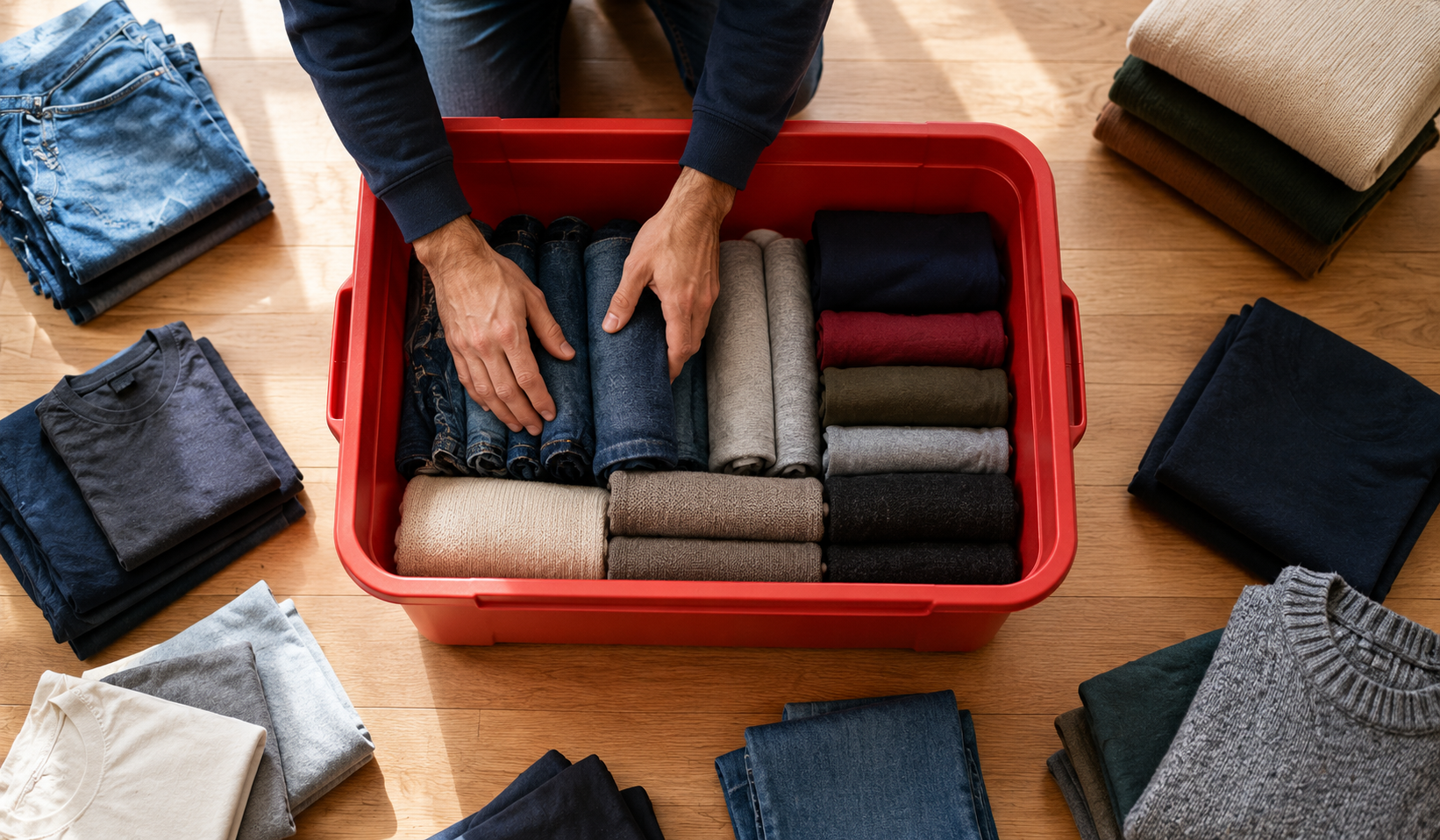
    Folded clothes packed into a plastic moving bin — EazyCrate NYC

    Quick Answer: Best Way to Pack Clothes for Moving

    Leave hanging clothes on their hangers and cover with a garbage bag — no wardrobe box needed. Fold flat items into moving bins or suitcases. Roll casual clothes to save space. Pack delicates in clean pillowcases. Avoid putting too many items in one bin — clothes are heavier than they look.

    Before You Pack — Edit Your Closet First

    This is the step most people skip, and it makes everything else harder.

    Before you pack a single item, go through your closet and pull anything you haven’t worn in 12 months. Moving is expensive. Every extra bin or box costs you money in labor and logistics. Don’t pay to move clothes you’re not going to wear.

    Create three piles: Keep, Donate, Toss. Bag the donation pile and schedule a pickup before your move date. You’ll pack faster and arrive at your new place with a cleaner closet.

    The Best Containers for Packing Clothes

    The container you use makes a bigger difference than most people expect. Here’s how the main options compare:

    2

    Wardrobe Boxes

    For hanging clothes you absolutely don’t want wrinkled — suits, dresses, formal wear — a wardrobe box with a hanging rod is worth the cost. They’re large and unwieldy, but they’re the best option for delicate hanging items.

    3

    Suitcases and Duffel Bags

    Use every piece of luggage you own. Pack them with the heaviest folded clothes (jeans, sweaters) — this puts weight where wheels can handle it and keeps your bins free for lighter items.

    4

    Garbage Bags

    For moving hanging clothes without a wardrobe box: bunch 5–8 items together on hangers, slide a garbage bag up from the bottom over the clothes, and tie or twist the top around the hanger hooks. Free, fast, and effective.

    Already deciding on containers? See: Should You Rent Moving Bins?

    Skip the Cardboard. Get Bins Delivered.

    EazyCrate delivers reusable plastic moving bins to your NYC door. The right size for clothes, shoes, books, and more.

    Reserve Your Crates →

    How to Pack Hanging Clothes

    You have two solid options for hanging clothes. The free method works for most people:

    A

    Garbage Bag Method — Free & Fast

    Best for: casual and everyday hanging clothes

    1. Keep clothes on their hangers.
    2. Group 5–8 items together.
    3. Slide a large garbage bag over the bundle from the bottom.
    4. Tie the bag’s opening around the top of the hangers.
    5. Transport and hang directly at the new apartment — no unpacking needed.

    B

    Wardrobe Box — Best for Formal Clothes

    Best for: suits, dresses, tuxedos, and anything you cannot wrinkle

    1. Assemble the wardrobe box and insert the hanging rod.
    2. Transfer clothes directly from your closet rod to the box rod.
    3. Tape and label the box.
    4. Load last in the truck so it stands upright throughout the move.

    How to Pack Folded Clothes

    Not all clothes pack the same way. The right method depends on how wrinkle-sensitive the item is:

    Folder Method

    For dress shirts, slacks, and blouses. Fold flat and stack neatly in the bottom of the bin. Add tissue paper between layers to reduce creasing.

    Roller Method

    For t-shirts, jeans, and gym clothes. Roll tightly and stand upright in the bin — takes 20–30% less space than folding and wrinkles less in transit.

    Bundling Method

    Wrap clothes around a central core item. The slowest method but fewest wrinkles — great for a mix of dress and casual items in one bin.

    Person using garbage bag trick to pack hanging clothes for moving

    Packing Delicate and Special Items

    Some clothes need more care than a simple roll or fold. Here’s how to handle the tricky ones:

    🥖

    Sweaters & Knitwear

    Fold — never hang knitwear for long periods. Pack with tissue paper between layers and keep in their own bin to avoid snagging on zippers.

    👔

    Formal Wear

    Use a wardrobe box or garment bag. If you must fold a suit, lay it flat on top of a full bin — never stack anything heavy on top of it.

    👟

    Shoes

    Keep in original boxes if available. Otherwise wrap in socks or tissue paper and pack in a dedicated bin. Never mix shoes with clothes — soles transfer dirt and can damage fabrics.

    🦮

    Underwear, Socks & Accessories

    These fill the gaps. Roll socks and stuff them into shoes to save space. Pack belts in circles along the inside edge of a bin.

    How Many Bins Do You Need for Clothes?

    Here’s a rough guide based on apartment size. If you have a large or walk-in closet, add 20–30%:

    Apartment Size Approximate Bins for Clothes Notes
    Studio 4–6 bins Includes small wardrobe and shoes
    1 Bedroom 6–10 bins Average closet and dresser
    2 Bedroom 10–15 bins Two closets; add wardrobe boxes for formal items
    3 Bedroom 15–20+ bins Large household — estimate high, not low

    Estimating your full move cost? See: How Much Do Movers Cost in NYC?

    Ready to Pack Smarter?

    EazyCrate delivers sturdy, stackable moving bins to your NYC door — then picks them up when you’re done. No tape. No assembly. No cardboard mess.

    Reserve Your Bins →

    Common Clothes-Packing Mistakes to Avoid

    These are the most common ways people make their move harder than it needs to be:

    !

    Overpacking Bins

    A bin packed with denim can weigh 50–60 lbs. Stay under 40 lbs per bin so movers and you can handle them safely without risk of injury.

    !

    Packing Wet or Damp Items

    Mildew forms fast in a sealed bin in a truck. Every item — especially gym clothes and towels — must be clean and completely dry before packing.

    !

    Mislabeling Seasonal Clothes

    Don’t pack summer clothes in a bin labeled “winter” and wonder where your shorts are in July. Pack by season and destination room, not by type.

    !

    Using Garbage Bags for Folded Clothes

    Bags work for hanging clothes on hangers, but not for folded items. Contents shift, bags aren’t stackable, and structured clothing gets crushed.

    A Simple Clothes-Packing Checklist

    Week Before Your Move

    Edit closet — donate, sell, or toss what you won’t wear
    Collect wardrobe boxes for formal hanging clothes
    Reserve moving bins (EazyCrate delivers to your NYC door)
    Gather large garbage bags for casual hanging items
    Wash and dry all laundry before packing day

    On Packing Day

    Garbage bag method for casual hanging clothes
    Wardrobe box for suits, dresses, and formal items
    Roll casual clothes (t-shirts, jeans) into bins upright
    Fold dress clothes flat with tissue paper between layers
    Shoes in their own dedicated bin, each pair wrapped
    Label every bin with contents and destination room

    Frequently Asked Questions

    Quick answers to the most common questions about packing clothes for a move.

    What is the best way to pack clothes for moving? +
    The fastest and most wrinkle-free method: garbage bag the hanging clothes on their hangers, roll casual folded items into moving bins, and use suitcases for heavy folds like jeans and sweaters. Reserve wardrobe boxes only for suits, gowns, and formal wear you can’t risk wrinkling.
    Should I pack clothes in boxes or bags? +
    Bins or boxes are better than bags for most clothes. Plastic moving bins are ideal — rigid, stackable, and protective in transit. Garbage bags work for hanging clothes but aren’t suitable for folded items that shift around and wrinkle.
    How do I pack clothes without wrinkles? +
    Leave hanging clothes on hangers (garbage bag method), or use the bundling method for folded dress clothes. Keep a single flat layer of dress clothes in each bin and don’t overpack on top. Tissue paper between dress shirt layers also helps significantly.
    Do I need to buy wardrobe boxes? +
    Only for formal hanging clothes like suits, dresses, and tuxedos. For everyday hanging clothes — shirts, jeans, jackets — the garbage bag method is free and equally effective. Most people need just 1–2 wardrobe boxes at most.
    Can I leave clothes in dresser drawers during a move? +
    Sometimes — if your dresser is light enough that movers can carry it with drawers in. Check with your moving company first. Heavier dressers typically need to be emptied to be moved safely without damage to the dresser or injury to the movers.
    How many bins do I need for clothes? +
    A rough guide: studio = 4–6 bins; 1 bedroom = 6–10 bins; 2 bedroom = 10–15 bins; 3 bedroom = 15–20+ bins. If you have a walk-in closet or large wardrobe, add 20–30% more. When in doubt, estimate high — you can always return unused bins.

    Packing Made Easier with EazyCrate

    Reusable plastic moving bins delivered to your NYC door. The right size for clothes, shoes, books, and everything in between. No tape, no assembly, pickup included.

    Reserve Your Crates →

  • How Much Do Movers Cost in NYC? (2026 Pricing Breakdown)

    How Much Do Movers Cost in NYC? (2026 Pricing Breakdown)

    NYC Moving Guide

    How Much Do Movers Cost in NYC? (2026 Pricing Breakdown)

    Hiring movers in NYC has a wide price range and confusing billing structures. Here’s exactly what to expect, what drives costs up, and how to move without overpaying.

    Reserve Moving Bins

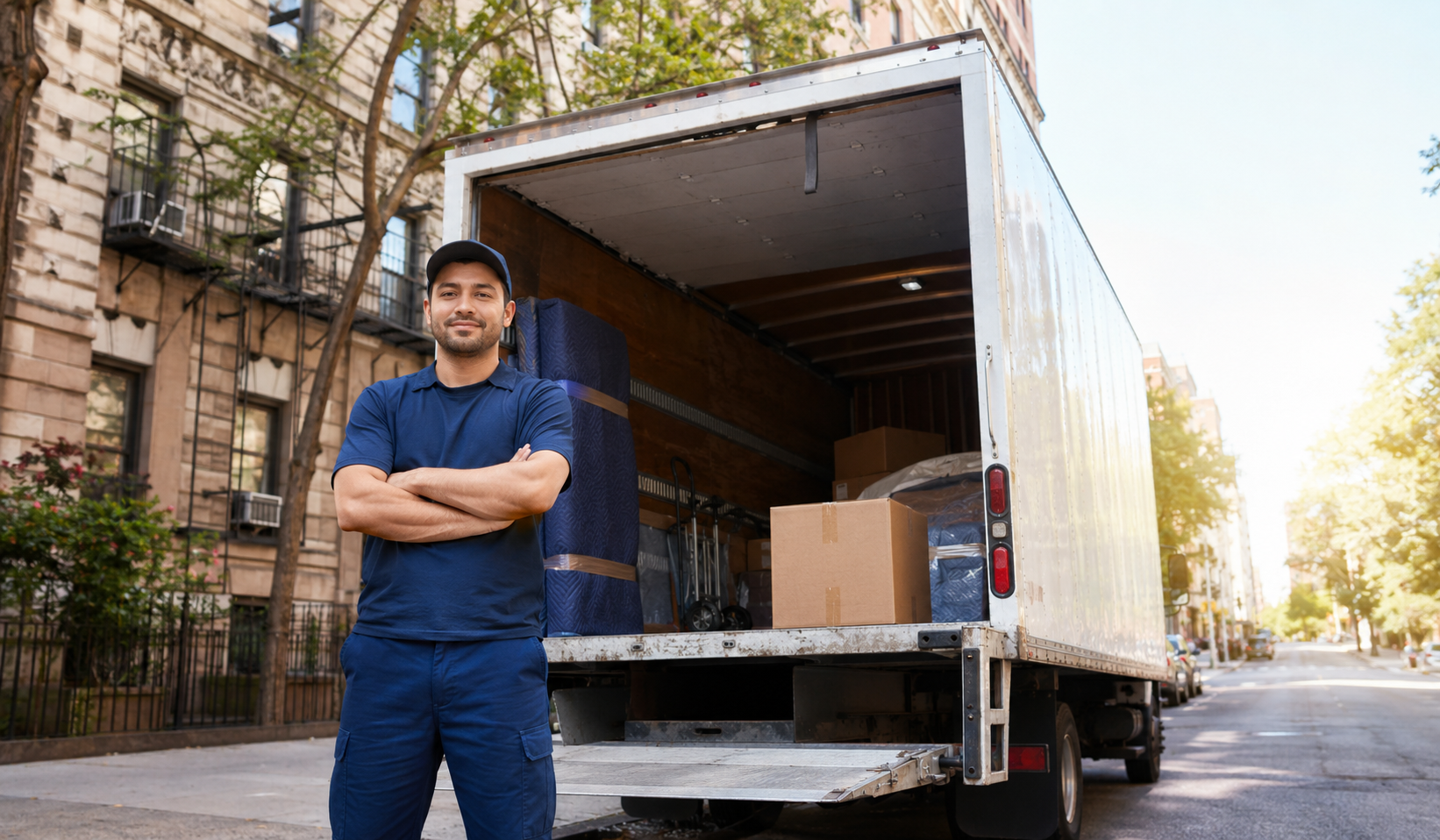
    Professional NYC mover standing confidently in front of a white moving truck on a Manhattan street

    Quick Answer

    Local NYC movers typically cost $100–$200 per hour for a 2-person crew. A 1-bedroom apartment move (4–6 hours) runs $400–$1,200. A 2-bedroom move averages $600–$1,600. Renting plastic moving bins through EazyCrate can reduce packing time and cut total mover hours — lowering your overall bill.

    Average NYC Moving Cost by Apartment Size

    These are estimates for local NYC moves (under 50 miles). Long-distance moves are priced differently — typically by weight and mileage.

    Apartment Size Crew Est. Hours Average Total Cost
    Studio 2 movers 2–4 hrs $200 – $700
    1 Bedroom 2 movers 4–6 hrs $400 – $1,200
    2 Bedroom 2–3 movers 6–8 hrs $600 – $1,600
    3 Bedroom 3–4 movers 8–12 hrs $900 – $2,400
    4 Bedroom+ 4+ movers 10–16 hrs $1,200 – $3,500+

    How NYC Moving Companies Charge

    1

    Hourly Rate (Most Common)

    Most NYC movers charge by the hour based on crew size:

    • 2-person crew: $100–$160/hr
    • 3-person crew: $150–$225/hr
    • 4-person crew: $200–$300/hr

    The clock usually starts when the crew leaves the company’s location and ends when they return — called portal-to-portal billing. Factor in 30–60 minutes of travel time on each end.

    2

    Flat-Rate Quotes

    Some companies offer flat-rate pricing for local moves. These can protect you against unexpectedly long moves, but may be priced conservatively.

    Always get a written binding estimate and confirm whether it covers stairs, elevators, long carries, and parking fees.

    3

    Minimum Hours

    Most NYC movers require a 3-hour minimum, even for small studio moves. Some charge a 4-hour minimum on weekends.

    If your move is quick, you still pay for the minimum — so plan accordingly and be ready when the crew arrives.

    Cut Your Mover Hours. Rent Pre-Built Bins.

    EazyCrate bins load faster than cardboard — helping movers work more efficiently and reducing your total bill.

    Reserve Your Crates

    What Drives Moving Costs Up in NYC

    These factors are the most common reasons a move comes in above estimate:

    1

    Walk-Up Floors

    Each flight of stairs typically adds $50–$75 per mover per floor. A 5th-floor walk-up can add several hundred dollars to your total.

    2

    Elevator & Building Rules

    Buildings with freight elevator windows may require more trips. Service elevator downtime adds billable mover hours to your bill.

    3

    Long Carries

    If the truck can’t park close to your entrance, movers charge for distances over 75 feet from truck to door — often $50–$100 extra.

    4

    Peak Season (June–Sept)

    Summer moves cost 15–25% more. Weekend moves in peak season can run 30% above a weekday winter move for the same apartment size.

    5

    Packing Services

    If your movers pack for you, expect an additional $25–$60 per packer per hour plus materials. Having bins pre-packed saves this cost entirely.

    6

    COI Requirements

    Many NYC buildings require movers to provide a Certificate of Insurance. Most reputable movers provide this free — but always confirm before booking.

    Person reviewing a moving company estimate on a laptop with cardboard boxes stacked in the background

    How Much to Tip NYC Movers

    Tipping is customary and expected in NYC. Standard tip is 15–20% of the total bill, split among the crew in cash directly at the end of the move.

    Move Total 15% Tip 20% Tip
    $600 $90 $120
    $800 $120 $160
    $1,200 $180 $240
    $1,600 $240 $320

    For excellent service on a difficult move — walk-up, heavy items, long day — tip 20–25%. Always tip in cash directly to each mover, not through the company. See our full guide: How Much to Tip Movers.

    How to Lower Your NYC Moving Cost

    📅

    Move Off-Peak

    Wednesday–Thursday moves in October–April are the cheapest. Avoid summer weekends — that’s peak demand with peak prices.

    ⏳

    Be Ready When They Arrive

    Every unpacked item is time the crew spends waiting. Have everything boxed and labeled before the truck pulls up.

    📦

    Use Plastic Bins, Not Cardboard

    Uniform-sized rental bins load 15–30% faster than mixed cardboard boxes. EazyCrate delivers bins to your door — ready to fill, no assembly. See if renting bins is worth it.

    🗑

    Declutter First

    Every item you don’t move saves mover time. Sell, donate, or trash anything before moving day — especially bulky items you don’t need in the new place.

    📋

    Get 3+ Quotes

    Prices vary widely between companies. Get at least 3 estimates. Watch for lowball quotes with vague terms — these often balloon with add-on charges on moving day.

    EazyCrate delivers reusable plastic moving bins to your NYC address. Delivery and pickup included — starting at $119/week.

    Reserve Your Bins

    Start Your Move the Smart Way

    Rent plastic moving bins and reduce your total move time — and your mover bill.

    Get Your EazyCrate Quote

    Red Flags When Hiring NYC Movers

    Protect yourself from fraudulent or low-quality moving companies. Walk away if you see any of these:

    ⚠

    No written estimate — any legitimate mover will provide one.

    ⚠

    Large cash deposit upfront — normal is 0–25%. More is a red flag.

    ⚠

    No DOT number or FMCSA registration — verify at fmcsa.dot.gov before booking.

    ⚠

    No COI or reluctance to provide one — required by most NYC buildings.

    ⚠

    Extremely low quotes with no itemization — these balloon with add-on fees on moving day.

    ⚠

    No physical address or unmarked truck — legitimate companies have verifiable locations.

    NYC Movers vs. DIY: What’s the Real Cost?

    For most NYC apartments — especially walk-ups or moves with furniture — hiring movers is worth it. Here’s how the options compare for a typical 1-bedroom move:

    Option Average Cost (1BR) Time Effort Level
    Hire professional movers $600 – $1,200 4–6 hours Low
    Rent a truck + friends $150 – $350 Full day Very High
    Add plastic bin rental (EazyCrate) +$119/week Saves 1–2 hrs Very Low

    Renting bins from EazyCrate adds roughly $119 to a 1BR move and significantly reduces pack/unpack time — a net savings on mover hours for most people.

    Frequently Asked Questions

    Are NYC movers more expensive than other cities? +
    Yes. NYC moving rates are among the highest in the US due to urban logistics, building requirements (COIs, elevator windows), and high demand. Expect to pay 20–40% more than national averages for a comparable move.

    How far in advance should I book NYC movers? +
    Book 4–6 weeks in advance for summer moves (June–September). Off-season moves (October–April) can often be booked 1–2 weeks out. Last-minute summer bookings are difficult and expensive.

    Do NYC movers disassemble and reassemble furniture? +
    Most full-service movers will disassemble and reassemble standard furniture like bed frames and dining tables. Always confirm this in advance and clarify whether there’s an added charge — some companies bill separately for this service.

    Can I use plastic bins instead of cardboard boxes? +
    Yes — and most NYC movers prefer them. Uniform sizing makes loading the truck faster and more efficient. EazyCrate delivers bins to your door and picks them up after the move, so there’s nothing to break down or recycle.

    What is portal-to-portal billing? +
    Portal-to-portal billing means the clock starts when the moving truck leaves the company’s warehouse and ends when it returns — including drive time to and from your location. Always factor in 30–60 minutes of travel time on each end when estimating your total cost.

    How do I verify a NYC moving company is legitimate? +
    Check their DOT number and FMCSA registration at fmcsa.dot.gov. Verify they can provide a Certificate of Insurance (COI) for your building. Look for a physical address, branded trucks, and reviews on Google or Yelp. Avoid movers who refuse a written binding estimate.

    Move Smarter in NYC

    Start with Better Bins. Spend Less on Movers.

    EazyCrate delivers reusable plastic moving bins to your NYC address. No cardboard, no assembly — just load and move. Pickup included after your move.

    Get Your EazyCrate Quote

  • Should You Rent Moving Bins? Here’s the Honest Answer

    Should You Rent Moving Bins? Here’s the Honest Answer

    Moving Tips

    Should You Rent Moving Bins? Here’s the Honest Answer

    Cardboard boxes are the default. But for most NYC moves, renting plastic bins is the smarter, faster, and cheaper choice once you run the numbers.

    Reserve Your Bins

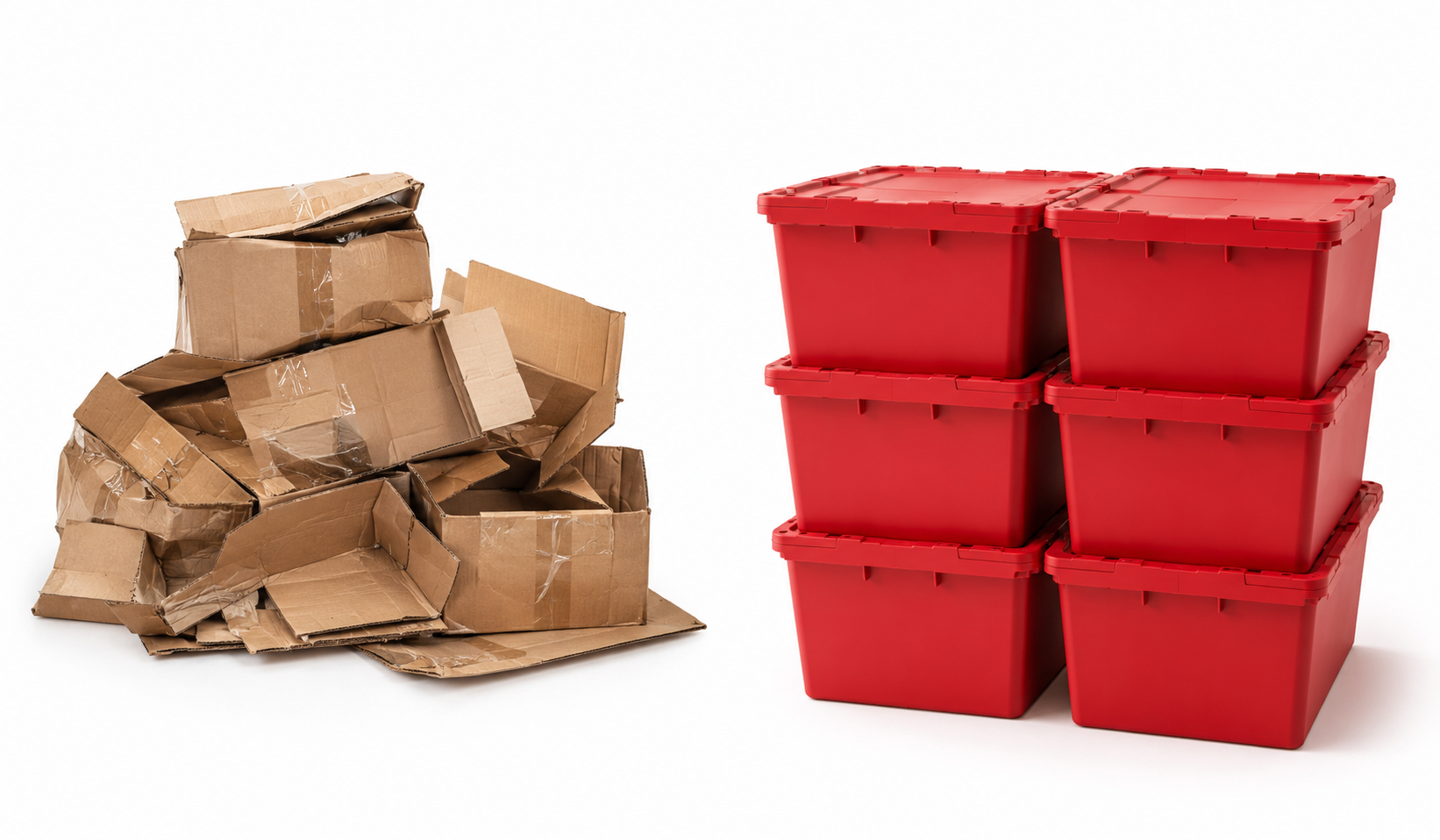
    Stack of orange EazyCrate plastic moving bins next to collapsed cardboard boxes — comparison of reusable bins vs cardboard

    Quick Answer

    Yes — for most moves, renting plastic moving bins is worth it. Rental bins are stronger, faster to pack, and don’t require tape or assembly. For NYC moves especially, the uniform stacking, weatherproofing, and no-waste pickup make them the better choice for most people.

    What Are Rental Moving Bins?

    Moving bin rental services deliver heavy-duty plastic crates to your home before your move. They’re uniform in size, have snap-lock lids, come with built-in handles, and stack securely in a moving truck. After your move, the company picks them up at your new address — sometimes the same day.

    With EazyCrate, you get delivery and pickup included in the weekly rate. You never have to recycle, dump, or break down a single box.

    This is different from buying boxes at Home Depot or picking up used cardboard from a liquor store. With rental bins, the logistics are handled end-to-end. See how it compares to renting individual plastic moving boxes.

    Renting Bins vs. Buying Cardboard Boxes

    Here’s how the two options compare across the factors that actually matter on moving day:

    Factor Rental Plastic Bins Cardboard Boxes
    Cost $119–$149/week (delivery + pickup included) $100–$250+ plus tape, markers
    Setup time Zero — lids snap shut, no assembly 15–30 min folding and taping per box
    Strength 65+ lbs per bin, won’t collapse Weakens with weight and moisture
    Stacking Uniform, stable, truck-efficient Varies by size — collapse risk
    Weather Waterproof snap lids Soaks through in rain
    Post-move Pickup included, nothing to store Recycling, dumping, or storage your problem
    Environmental impact Reused 100+ times, zero waste Single-use, ends in landfill

    Bottom line: the all-in cost of buying cardboard is usually close to — or more than — renting bins. With a worse experience.

    Skip the Cardboard. Rent Clean Plastic Bins.

    Delivered to your door. Picked up after your move. Starting at $119/week.

    Reserve Your Crates

    When Renting Moving Bins Makes the Most Sense

    Renting is the clear winner in these situations:

    • ✓
      You’re moving in NYC. Tight staircases, narrow hallways, and weather exposure on street-level loading make plastic bins far more practical than cardboard.
    • ✓
      You hate packing. No tape, no building boxes, no collapse mid-stack. Bins arrive assembled and ready to fill.
    • ✓
      You care about sustainability. Rental bins are reused dozens of times. One EazyCrate order replaces 30–50 cardboard boxes from going into landfill.
    • ✓
      You want movers to work faster. Uniform bin sizes let movers stack and load the truck more efficiently — reducing hourly labor time and cost.
    • ✓
      You’re moving to or from a furnished rental. No bins to store, no boxes to get rid of at your new place. Pickup is scheduled and handled for you.
    Person snapping the lid shut on a fully packed orange EazyCrate plastic moving bin in a living room

    When Buying Cardboard Might Make More Sense

    There are scenarios where cardboard still wins:

    • →
      You’re moving long-distance. Most bin rental companies operate within a specific metro area. If you’re moving cross-country, cardboard may be your only option for items going in the truck.
    • →
      You can get truly free boxes. Liquor stores, bookstores, and Buy Nothing groups give away sturdy cardboard for free. On a very tight budget with time to collect, this reduces upfront cost.
    • →
      You need to store items long-term. If you’re going into temporary housing, you may need boxes you can keep indefinitely — not return after a week.

    How Much Does Moving Bin Rental Actually Cost?

    EazyCrate packages are priced by apartment size, with delivery and pickup always included:

    Move Size EazyCrate Weekly Rate Comparable Cardboard Cost
    Studio / 1-Bedroom $119/week $100–$150 (boxes + tape + time)
    2-Bedroom $139/week $150–$250+ (plus 3–4 hrs assembly)
    3-Bedroom+ $149/week $200–$350+ (plus disposal)

    When you account for tape, markers, assembly time, and post-move disposal, plastic bin rental is a smart value for most NYC moves — and the experience is dramatically better.

    See Exactly What You’ll Pay

    No hidden fees. Delivery and pickup included. Reserve online in minutes.
    View Pricing & Reserve

    Common Mistakes When Choosing “Free” Cardboard Boxes

    Free boxes from Craigslist or neighborhood groups are tempting. Here’s what most people don’t account for:

    Time Cost

    You Have to Go Get Them

    Free boxes require multiple trips to collect, sort, and carry. That’s hours of pre-move effort before a single item is packed.

    Quality Risk

    Unpredictable Condition

    Used boxes may be structurally compromised. Weak seams, moisture damage, and pest exposure are hard to spot until a box gives out mid-move.

    Packing Efficiency

    Inconsistent Sizes Hurt Loads

    Mixed box sizes load inefficiently into a truck and make stacking unreliable — creating dead space and collapse risk.

    Hidden Labor

    Still Have to Dispose

    After the move, you still need to break down, tie up, and arrange recycling or bulk trash pickup. In NYC that’s a real-time cost.

    How to Decide in 3 Questions

    Not sure which option is right for your move? Ask yourself these three questions:

    1

    Is bin rental available in my area?

    If yes, rental is accessible at a fair price. EazyCrate serves NYC and surrounding areas with same-week delivery.

    2

    Is my time worth more than zero?

    Bins save 3–4+ hours of packing prep vs. cardboard. If your time has value, rental wins on that alone.

    3

    Do I care about sustainability?

    Rental bins eliminate dozens of cardboard boxes from the waste stream. One order, zero landfill impact from packaging.

    If you answered yes to any of these, moving bin rental is the better choice.

    Frequently Asked Questions

    Is renting moving boxes worth it? +
    For most moves — especially urban or NYC moves — yes. The convenience, strength, and all-in pricing make rental bins the better value once you factor in tape, assembly time, and disposal costs of cardboard. Most customers find the experience dramatically less stressful.

    How many rental bins do I need for a 1-bedroom? +
    25–35 bins is the standard for a 1-bedroom apartment. EazyCrate recommends starting with 30 — you can add extras if needed. The EazyCrate team can help you estimate based on your specific apartment size.

    Are rental bins cleaner than used cardboard boxes? +
    Yes. EazyCrate bins are sanitized between each use. Free or used cardboard boxes may carry dust, moisture, pests, or odors from previous storage — unpredictable quality that can cause real problems on moving day.

    What if I need the bins longer than one week? +
    EazyCrate offers rental extensions. Just reach out before your scheduled pickup date to adjust your rental period. Extended rates are available — no need to rush your move because of a deadline.

    Can my movers handle plastic rental bins? +
    Absolutely. Professional movers work with plastic bins regularly and often prefer them for the uniform sizing, secure lids, and built-in handles. Uniform bins load and unload faster than mixed cardboard boxes — which can reduce your total moving time.

    Are plastic moving bins eco-friendly? +
    Much more so than cardboard. A single set of EazyCrate bins gets reused dozens of times, replacing 30–50 single-use cardboard boxes per rental. The reuse model dramatically reduces waste over time compared to disposable packaging.

    Ready to Move Smarter?

    Get Clean, Sturdy Moving Bins Delivered to Your Door

    EazyCrate delivers professional-grade moving bins to your NYC address, then picks them up after your move. No boxes to build, no tape to buy, no recycling to arrange.

    Reserve Your Crates

  • How to Rent Plastic Moving Boxes in NYC (And Why It Beats Cardboard)

    How to Rent Plastic Moving Boxes in NYC (And Why It Beats Cardboard)

    Plastic Bin Rental NYC

    How to Rent Plastic Moving Boxes in NYC (And Why It Beats Cardboard)

    Renting plastic moving boxes is one of the easiest upgrades you can make on moving day. Sturdy, stackable, delivered to your door — and picked up when you’re done. No cardboard assembly. No tape. No landfill.

    Neatly stacked orange reusable plastic moving bins in a bright modern NYC apartment

    QUICK ANSWER

    You can rent plastic moving boxes (also called moving crates or bins) online and have them delivered to your door. Rental prices typically range from $3–$7 per box per week. In NYC, EazyCrate delivers reusable bins directly to your apartment — no cardboard assembly, no waste. Packages start at $119–$149/week with delivery and pickup included.

    What Are Rental Moving Boxes?

    Rental moving boxes — also called moving crates, plastic bins, or reusable moving boxes — are heavy-duty plastic containers designed specifically for moving. Unlike cardboard, they:

    • Stack without crushing
    • Don’t collapse when wet
    • Don’t require assembly or tape
    • Are cleaned between every use
    • Hold significantly more weight per box

    Most moving box rental companies deliver the bins to your home before your move date and pick them up afterward — so there’s zero waste and zero hassle on your end.

    How Renting Moving Boxes Works

    The process takes under 5 minutes to set up:

    1. Choose how many bins you need — most companies have recommendations by apartment size
    2. Select your delivery date — usually 1–2 days before your move
    3. Pack your bins like you would cardboard boxes
    4. Move — your movers handle them just like regular boxes
    5. Done — bins are picked up at your new address after your move

    With EazyCrate, delivery and pickup are included in your rental. You don’t have to return anything or arrange a drop-off — we come to you.

    How Many Moving Boxes Do You Need?

    Apartment Size Recommended Bins Notes
    Studio 15–20 bins Light load, quick move
    1 Bedroom 25–35 bins Standard for most 1BRs
    2 Bedroom 40–55 bins Allow buffer for kitchen
    3 Bedroom 60–80 bins Family move or heavier loads
    4+ Bedroom 80+ bins Request a custom quote

    When in doubt, order more. Unused bins don’t cost extra at EazyCrate — you only pay for the set you reserve.

    How Much Does It Cost to Rent Moving Boxes?

    Moving box rental typically runs $119–$149 for a standard NYC move. Compare that to buying cardboard:

    Option Cost What You Get
    Rent plastic bins (EazyCrate) $119–$149/week Delivery + pickup included, no waste
    Buy cardboard boxes (UHaul, etc.) $100–$200+ Assembly, tape, recycling your problem
    Free boxes (Craigslist, etc.) $0 upfront Quality unknown, trips to collect, disposal your problem

    When you factor in tape, markers, box cutters, and the time spent building and breaking down cardboard, plastic bin rental often works out to the same price — or cheaper — with far less effort.

    Ready to Skip the Cardboard?

    EazyCrate delivers clean, sturdy plastic moving bins to your NYC door and picks them up after your move. No assembly, no tape, no waste.

    Plastic Bins vs. Cardboard Boxes — Which Is Better for Moving?

    Cardboard is the default — but it’s not the best option for most moves. Here’s how they compare:

    Cardboard Boxes

    • Collapse under heavy items
    • Can’t be stacked safely with mixed weights
    • Get soggy in rain or humidity
    • Require tape, assembly, and disposal
    • Single-use product

    Plastic Moving Bins

    • Uniform size = easier stacking on the truck
    • Lids snap shut — no tape needed
    • Waterproof and weatherproof
    • Reusable across many moves, no waste
    • Built-in handles for easier carrying

    For NYC moves especially — where your belongings may sit outside during a truck load or get caught in a rain shower — plastic bins are a genuine upgrade. See also: why rent moving bins instead of buying cardboard.

    Delivery person wheeling a dolly of orange EazyCrate plastic moving bins through NYC apartment building entrance
    NYC Movers Agree

    Why NYC Movers Prefer Plastic Bins

    Professional movers in New York City work faster and more safely with uniform plastic bins:

    • Consistent dimensions mean bins stack tightly in the truck, using space efficiently
    • Sturdy lids mean no shifting or crushing mid-transit
    • No box collapses on a third-floor walk-up
    • Easier to grip and carry at speed through narrow hallways and staircases

    Many professional NYC moving companies actively recommend plastic bins. It makes the move faster — which can actually reduce your total hourly labor cost.

    Reserve Your Bins

    How to Reserve Rental Moving Boxes in NYC

    EazyCrate delivers to your door in the NYC metro area. Select your move date, we drop off bins 1–2 days before, and pick them up at your new address after. Takes under 5 minutes to book.

    Frequently Asked Questions

    Where can I rent moving boxes in NYC? +
    EazyCrate delivers reusable plastic moving bins anywhere in the NYC metro area. Select your delivery date online and bins arrive at your door — no in-store pickup needed.
    How much does it cost to rent plastic moving boxes? +
    EazyCrate packages start at $119–$149 per week, with delivery and pickup included. That’s comparable to — or less than — buying cardboard boxes, tape, and supplies, with zero assembly or disposal effort.

    How long can I keep rental moving boxes? +
    Typically one week, which covers most moves. EazyCrate offers extensions if your move takes longer — just reach out before your scheduled pickup date.
    Are plastic moving boxes stronger than cardboard? +
    Yes — significantly. Plastic bins are rated for 65+ lbs each, stack without crushing, and don’t collapse when wet. Cardboard weakens with moisture and weight, especially when stacked 3–4 high in a moving truck.
    Do my movers know how to handle rental bins? +
    Yes. Professional movers handle plastic bins regularly. The uniform size and locking lids actually make their job easier than working with mixed cardboard boxes of different heights and weights.
    Do I need to clean the bins before return? +
    No — EazyCrate sanitizes all bins between uses. Just return them empty. No cleaning, no prep work on your end.
    Can I rent moving boxes for a long-distance move? +
    EazyCrate currently serves the NYC metro area. For long-distance moves, reach out to discuss your options and we’ll help find the best solution for your situation.

    Ready to Ditch the Cardboard?

    EazyCrate delivers clean, sturdy reusable plastic moving bins to your NYC door — and picks them up after your move. No assembly, no tape, no waste. Takes under 5 minutes to book.

    Reserve Your Moving Bins

  • Moving to NYC in 2025: Everything You Need to Know Before You Arrive

    Moving to NYC in 2025: Everything You Need to Know Before You Arrive

    NYC Relocation Guide

    Moving to NYC in 2025: Everything You Need to Know Before You Arrive

    Moving to New York City is unlike moving anywhere else. The city is dense, the apartments are small, and the logistics of getting a moving truck down a Manhattan street feel like a puzzle wrapped in a parking ticket. With the right preparation, yours can go smoothly.

    Aerial view of the Manhattan NYC skyline at golden hour sunset

    QUICK ANSWER

    Moving to New York City requires planning 60–90 days in advance. Key steps: set your budget (average NYC 1BR runs $3,000–$4,500/month), choose your borough, book movers early (especially for weekend moves), secure a Certificate of Insurance (COI) if your building requires it, and arrange moving bin delivery ahead of moving day.

    How Far in Advance Should You Plan Your NYC Move?

    At minimum: 60 days before your move date. 90 days is better.

    Here’s why NYC moves need more lead time than anywhere else:

    • Popular moving companies book out 4–6 weeks in advance, especially May–September
    • Your building may require a Certificate of Insurance (COI) from your moving company — this takes time to obtain
    • Many buildings only allow moves during specific hours (Mon–Fri 9am–5pm is common)
    • Freight elevator reservations are first-come, first-served in most buildings

    Start your checklist 3 months out and you’ll avoid the most common NYC moving headaches.

    Choosing the Right NYC Borough

    Your borough choice shapes your cost of living, commute, and lifestyle. Here’s a quick overview:

    Borough Vibe Average 1BR Rent
    Manhattan Fast-paced, central, highest cost $3,500–$5,000+/mo
    Brooklyn Creative, diverse, slightly more space $2,800–$4,000/mo
    Queens Multicultural, quieter, underrated $2,200–$3,200/mo
    The Bronx Most affordable, improving rapidly $1,800–$2,600/mo
    Staten Island Suburban feel, car helpful $1,800–$2,500/mo

    For most first-time NYC movers, Brooklyn and Queens offer the best balance of cost, character, and access to Manhattan.

    What to Know About Renting in NYC

    NYC’s rental market is fast. Apartments move in 24–48 hours, often sight unseen. Come prepared.

    Typical requirements from landlords:

    • Income at 40x the monthly rent (e.g., $120,000/year for a $3,000/mo apartment)
    • Two months’ deposits or a guarantor if your income doesn’t qualify
    • Broker fee (sometimes 12–15% of annual rent, though this is increasingly changing)
    • Proof of employment and 2–3 years of tax returns

    Be ready to apply the same day you view an apartment. Have your documents pre-assembled before you start your search.

    NYC Moving Costs — What to Budget

    Plan for your move to cost more than you expect. NYC surprises everyone.

    Budget Line Estimated Cost
    Local NYC movers (2–3 hours) $400–$900
    Local NYC movers (full day) $800–$1,800+
    Moving bin rental (EazyCrate) $119–$149/week
    Security deposit + first month $6,000–$10,000+
    Broker fee $3,000–$6,000 (if applicable)
    Utilities setup $100–$200

    For a detailed breakdown of what movers charge in the city, see our guide to average NYC moving costs for a 1-bedroom.

    Planning Your NYC Move?

    EazyCrate delivers reusable plastic moving bins to your NYC door — sturdier than cardboard, stackable, and picked up after your move.

    Do You Need a Moving Permit in NYC?

    If you’re moving into or out of a building, you typically don’t need a city-issued permit — but you may need a parking permit to reserve space in front of your building for the moving truck.

    NYC DOT issues temporary no-parking permits for moving trucks. They’re free and can be applied for online at nyc.gov, but require 5–7 business days of lead time. Plan ahead — a missing parking spot can add hours to your move.

    Certificate of Insurance (COI) — What Is It and Do You Need One?

    Many NYC buildings — especially co-ops and condos — require your moving company to provide a Certificate of Insurance (COI) naming the building as an additional insured party.

    Always ask your building management before move day:

    • Do you require a COI from the moving company?
    • What are the minimum coverage amounts?
    • Does the building name and address need to be listed specifically?

    Get this information to your moving company at least 2 weeks before your move date — most reputable movers can provide a COI within a few days, but don’t leave it until the week of.

    Packing Smart

    Packing Tips for a NYC Move

    Small NYC apartments mean tight corridors, small elevators, and not a lot of floor space to stage boxes. A few rules that make a real difference:

    • Use rental bins instead of cardboard — they stack cleanly, don’t collapse in narrow hallways, and are faster for movers to carry through tight spaces
    • Label everything before the crew arrives — room names on every bin or box
    • Measure your furniture before moving day — many NYC apartments won’t fit a king bed or large sectional
    • Purge before you move — storage in NYC is expensive; if you haven’t used it in a year, leave it behind
    Young professional holding apartment keys in a sunlit NYC apartment on moving day with plastic moving bins

    What NOT to Bring When Moving to NYC

    Leave Behind Why
    A large car Parking is expensive and stressful in most boroughs (Staten Island and outer Queens excepted)
    Oversized furniture NYC doorways run 30–32″ wide; measure before you move
    More than you can fit NYC closets are notoriously small; extra stuff becomes a storage bill
    Assumed appliances Many apartments have no washer/dryer and are gas stove only — confirm before signing

    Moving to NYC Checklist

    Use this timeline to stay on track from 90 days out to moving day:

    Timeframe Key Tasks
    90 days before Set budget, research neighborhoods, notify current landlord of move-out date
    60 days before Start apartment search, get 3 mover quotes, ask building about COI and freight elevator scheduling
    30 days before Sign lease, pay deposits, book movers, apply for NYC parking permit, reserve moving bins
    2 weeks before Provide COI to building, begin packing non-essentials, confirm move date with movers
    Moving day Start early, tip movers in cash, document the apartment condition before unloading

    Skip the Cardboard Box Chaos

    EazyCrate delivers sturdy plastic moving bins to your NYC door — no assembly, no collapse. Delivered before your move, picked up after.

    Frequently Asked Questions About Moving to NYC

    Is it expensive to move to NYC? +
    Yes — between deposits, broker fees, and moving costs, budget $8,000–$15,000 for your initial move-in expenses, depending on the apartment and whether you use a broker. The apartment itself is the biggest variable.
    When is the best time to move to NYC? +
    October through February is off-peak and cheaper. May through September is peak season — more competition for apartments, higher moving costs, and hotter moving days. If you have flexibility, fall is ideal.
    Do you need a broker to rent in NYC? +
    Not always. No-fee apartments exist, especially in outer boroughs and directly through landlords. Sites like StreetEasy filter by no-fee listings. But in competitive markets, many available units do go through brokers.
    What is the easiest borough to move into as a first-timer? +
    Brooklyn — specifically Park Slope, Williamsburg, Bushwick, or Crown Heights — is the most popular first stop for NYC newcomers. Slightly more affordable than Manhattan, with great subway access and a strong sense of community.
    How do I find a moving company in NYC? +
    Get 3 quotes. Look for companies licensed with the NYDOT. Ask specifically about COI provision and hourly vs. flat-rate pricing. Avoid movers with no physical address or reviews only from one platform.

    Arriving in NYC? Don’t Start with Cardboard.

    EazyCrate delivers reusable plastic moving bins to your new NYC address — sturdy, stackable, and picked up after your move. Start your NYC move the right way. Leaving the city instead? See moving out of NYC.

    Reserve Your Crates Now

  • How Much to Tip Movers in 2025 (By Job Type & Crew Size)

    How Much to Tip Movers in 2025 (By Job Type & Crew Size)

    NYC Moving Guide

    How Much to Tip Movers in 2025

    Moving is stressful enough — and then comes the question nobody prepared you for: do you tip the movers, and if so, how much? Here’s the straightforward answer by job type, city, and crew size.

    Professional NYC mover receiving a cash tip from a customer at apartment door

    QUICK ANSWER

    Tip movers $4–$6 per mover per hour, or $20–$50 per mover for a standard local move. For excellent service on a full-day job, $50–$100 per mover is appropriate. Always tip in cash at the end of the move.

    Do You Tip Movers?

    Yes — tipping movers is standard practice in the U.S., similar to tipping a restaurant server or a hairdresser. Professional movers do physically demanding work, often in extreme weather and tight spaces, and gratuity is a real and expected part of their income.

    That said, it’s always discretionary. Tip based on the quality of service you received — not out of obligation.

    How Much to Tip Movers — Standard Amounts by Job Type

    The most common benchmark is $4–$6 per mover per hour. For a flat-rate calculation by job size:

    Move Type Tip Per Mover Notes
    2-hour local move $10–$20 Short job, light tip
    4-hour local move $20–$40 Standard local move
    8-hour full day $40–$80 Full-day standard tip
    Long-distance move $50–$100+ Higher stakes, more effort
    NYC or high-cost city Add 10–20% Cost of living + difficulty premium

    Always tip each mover individually in cash — not one lump sum to the crew leader to split. This ensures every person gets exactly what you intended.

    How Much to Tip Movers in NYC

    New York City moves are in a category of their own. Tight stairwells, elevator waits, walk-up buildings, street parking restrictions, and building logistics all add to what your crew has to manage. For NYC moves, add 20–30% on top of the national standard.

    NYC Move Type Tip Per Mover
    Short 2-hour NYC move $20–$30
    Half-day (4 hours) $40–$60
    Full-day NYC move $60–$100
    High-rise with freight elevator waits Add $10–$20

    NYC movers take on real added labor. Tight spaces, freight elevator windows, and city logistics all make the job significantly harder than a suburban move. Tip accordingly.

    For a full breakdown of what moving in NYC actually costs, see our guide to average moving costs for a 1-bedroom in NYC.

    Planning Your NYC Move?

    EazyCrate delivers reusable plastic moving bins to your door — sturdier and stackable, no cardboard assembly required.

    Tipping by Crew Size

    When calculating total tips, multiply your per-person amount by crew size and prepare individual envelopes:

    Crew Size Typical Job Tip Per Person
    2-person crew 1BR apartment $20–$40
    3-person crew 2–3BR apartment or house $40–$80
    4–5 person crew Large home or commercial $50–$100

    Bring exact change in individual envelopes. Label each one if possible so you can hand them directly to each mover — not just to the crew leader.

    Tip More When It’s Earned

    When to Tip More Than Standard

    • The crew worked faster than expected
    • They handled fragile, heavy, or valuable items with exceptional care (pianos, antiques, art)
    • They navigated difficult conditions — stairs, narrow halls, tight doorways
    • Weather was extreme: heat wave, rain, or snow
    • They disassembled and reassembled furniture
    • They helped with last-minute packing or unpacking
    Smiling professional mover in dark uniform ready for moving day in NYC

    When It’s Okay to Tip Less

    Tipping is discretionary. You can reduce or skip a tip if:

    • Items were damaged due to clear carelessness
    • The crew was significantly late without communication
    • The final bill was far above the original quote without explanation
    • The team was rude or unprofessional

    If something went wrong, address it with the company first — most movers have damage protection policies. Don’t penalize an individual crew member for an issue that was someone else’s fault.

    Cash, Venmo, or Credit Card — How to Tip Movers

    Cash is the preferred method, always. Movers can pocket it immediately without waiting on a company payout. Bring $20 bills on moving day so you have flexibility.

    Payment Method Works? Notes
    Cash (bills) Best option Immediate, personal, preferred by all crews
    Venmo / Zelle OK Ask ahead — some crews accept, some don’t
    Credit card tip via company Use caution May be delayed or reduced before reaching workers
    Food and drinks Nice gesture Always appreciated — but not a substitute for cash

    When to Tip — Before or After the Move?

    Always tip at the end, after everything is unloaded and placed to your satisfaction. This lets you adjust the amount based on the actual service received. Have the cash ready in your pocket before the crew finishes — you don’t want to be scrambling for an ATM after they’ve packed up.

    Pack Smarter on Moving Day

    EazyCrate delivers reusable plastic bins to your NYC door. No assembly, no collapse — just pack and go.

    Frequently Asked Questions About Tipping Movers

    Do you tip movers from a moving company? +
    Yes. The company rate covers labor cost — it doesn’t include gratuity. Full-service movers from any provider still expect tips just like independent movers. Tip based on service quality, not company affiliation.
    Do you tip long-distance movers? +
    Yes. For long-distance moves where a driver picks up and delivers on different days, tip at pickup and again at delivery. If the same crew handles both legs, tip fully at delivery.
    Is $20 a good tip for movers? +
    For a short 2-hour job, $20 per person is reasonable. For a full 8-hour day, $20 per mover is below standard — most people tip $40–$80 for a full day of professional work.
    Is $100 a good tip for movers? +
    For a large, difficult, or full-day move — especially in a city like NYC with added complexity — $100 per mover is a generous but completely appropriate tip for exceptional service.
    Should I tip movers if they break something? +
    If the damage was minor or incidental on a hard job, tip normally and discuss the damage separately with the company. If it was due to clear negligence, reduce the tip and file a damage claim.
    How do I calculate the total tip for a crew? +
    Decide on a per-person amount, then multiply by crew size. Example: 3 movers on a full-day job at $60 each = $180 total. Pre-count each person’s amount and place it in a separate envelope.
    Can I offer food instead of a cash tip? +
    Food and drinks (especially water, coffee, or pizza) are always appreciated — but they don’t replace a cash tip. Offer refreshments throughout the day AND tip cash at the end of the move.
    Is tipping movers customary? +
    Yes — tipping movers is widely considered standard etiquette in the U.S. It’s not legally required, but gratuity makes up a meaningful part of a mover’s income and is expected for good service.

    Don’t Let Packing Stress Add to Moving Day

    EazyCrate delivers reusable plastic bins to your NYC door — no assembly, no cardboard mess. Just pack, move, and we’ll pick them up when you’re done.

    Reserve Your Bins Now

  • How to Pack a NYC Apartment: A Room-by-Room Guide

    Packing Guide

    How to Pack a NYC Apartment: A Room-by-Room Guide

    Packing a New York City apartment is a different challenge than packing a house. Smaller spaces, narrower hallways, freight elevators with time windows, and buildings with strict rules. Here’s how to do it efficiently. And if your building has rules of its own, the apartment moving bins page answers walk-up, doorman, and COI questions.

    Book Reusable Moving Bins

    Organized NYC apartment interior with red storage unit, ready to pack for moving day

    Quick Answer

    Pack a NYC apartment room by room: start with storage areas and out-of-season items 3–4 weeks out, then tackle the living room and bedroom, then bathroom, and pack the kitchen second-to-last. Keep an “open first” bag for essentials. NYC-specific tip: confirm freight elevator hours and building rules before move day, not after.

    Before You Start Packing: The Prep Work

    Start 3–4 weeks before your move. NYC moves are more time-sensitive than most because of building-specific logistics — elevator reservation windows, certificate of insurance requirements for movers, and tight stairwells that make last-minute decisions expensive.

    1

    Declutter first

    NYC apartments accumulate in proportion to their square footage. Before packing anything, do a pass for sell, donate, or discard. Less to pack means less to move — and less per bin.

    2

    Get your bins or boxes ready before you start

    Running out of boxes mid-pack on a Thursday evening is a specific kind of stressful. Order moving bins or boxes before you begin — not as you go. Use the bin calculator to get an accurate count for your apartment size.

    3

    Confirm building logistics

    Reserve the freight elevator, confirm moving hours with your building super, and check whether your movers need a certificate of insurance filed with the building. Do this 2 weeks before move day, not the morning of.

    4

    Create your packing order

    Pack what you use least first. Storage areas, books, off-season clothes, and decorative items first. Kitchen and bathroom last. The goal: keep your apartment livable until the final days before the move.

    Optimal NYC Apartment Packing Order

    Pack in this order to keep your apartment functional until moving day.

    Week What to Pack Why
    3–4 weeks out Storage areas, off-season clothes, books, decorative items Rarely used — won’t disrupt daily life
    2 weeks out Living room (art, electronics, décor), guest bedroom items Gives you time to find the right boxes for fragile items
    1 week out Bedroom clothes, bedding, remaining décor Still livable with basic items out
    2–3 days out Kitchen (most of it), bathroom non-essentials Save the hardest rooms for last with energy left
    Night before Last-use kitchen items, toiletries, open-first bag You still need coffee in the morning

    Reusable bins make NYC moves faster

    Stackable, durable, and delivered to your door. No assembly, no collapse, no tape.

    Reserve Moving Bins

    Room-by-Room Packing Guide

    🍳 Kitchen

    The kitchen is the hardest room to pack — and the one most people put off. Pack it second-to-last, after every other room is done.

    Pantry & dry goods

    Start here. Use one bin specifically for pantry items. Donate anything you won’t use before moving. Group by type: canned goods, grains, sauces, snacks.

    Dishes & glassware

    Wrap each piece individually in packing paper. Pack dishes vertically — on their side — not flat stacked. They’re far less likely to crack that way. Full guide: how to pack dishes and glassware in plastic moving bins →

    Pots & pans

    Nest pots inside each other with a layer of packing paper between each. Pack vertically when possible, the way you’d arrange them in a cabinet.

    Appliances

    Wrap cords separately and secure them. Small appliances go in their original boxes if you have them. Otherwise wrap in packing paper and pack upright.

    💡 Keep out: Coffee, mugs, and one pot stay out until the night before. Pack these in your open-first bin.

    🛏 Bedroom

    Hanging clothes

    Use wardrobe bins. Keep everything on the hanger — transfer directly from closet rod to wardrobe bin rod. Clothes arrive wrinkle-free and ready to hang.

    Folded clothes

    Pack by type or season. Soft clothing is excellent filler — use it to cushion breakable items in other bins when you have gaps.

    Bedding & pillows

    These compress well and work as padding around harder items. Pack in a large bin or an oversized laundry bag. Pack last.

    Dresser drawers

    If drawers aren’t too heavy, movers can often move the dresser with drawers in — just tape or stretch-wrap them shut. Remove and pack separately if heavy.

    💡 Nightstand: Pack chargers, medications, and anything you’ll need on moving night in your personal bag — not in the moving bins.

    🛋 Living Room

    Books

    Pack in small bins only. Books are extremely heavy — never fill an entire bin with just books. Mix with lighter items in every bin to keep weights manageable.

    Electronics & cords

    Photograph your TV and entertainment setup before disconnecting. Use original boxes when possible. Label every cord with a tape flag noting what it belongs to.

    Art & framed items

    Wrap in packing paper or bubble wrap. Use mirror boxes for large framed art. Smaller décor goes in bins with generous packing paper cushioning on all sides.

    Furniture

    Movers handle the heavy lifting — but remove everything from inside drawers and shelves before they arrive. Loose items slow movers down and risk damage.

    🚿 Bathroom

    Bathrooms are usually last to pack and first to need access at the new place. Pack accordingly.

    Toiletries

    Use a clear bag or small bin. Put anything that might leak into a sealed zip-lock bag first. Pack toiletries together so they’re easy to find immediately after move-in.

    Towels & linens

    Pack in a bin — they compress well and don’t need much protection. Use towels as soft padding around harder items in other bins.

    Medications

    Keep prescription medications in your personal bag — not in the moving bins. They need to stay accessible throughout the entire moving process.

    Cleaning supplies

    Some cleaning products can’t go in a moving truck due to flammability. Check with your movers. Try to use up cleaning products in the weeks before your move.

    Packing a NYC Studio Apartment

    A studio adds complexity because your bedroom, living room, and workspace are all the same room. The key is treating it as distinct zones even though the walls don’t separate them.

    1

    Identify zones: sleeping area, kitchen, desk/work area, living area. Label your bins by zone from the start.

    2

    Pack each zone separately. Bins from the sleeping zone go in one corner; kitchen zone bins go in another. Keep it organized from the first box.

    3

    Keep the path to the door clear. In a small space, bins accumulate fast. You still need to move through the apartment — and movers need to get in and out.

    Reusable bins that stack cleanly are especially useful in studios. Cardboard boxes in a 400 sq ft apartment become an obstacle course.

    See the Moving Box Organization Guide

    Person packing and organizing belongings in a NYC apartment before moving day

    NYC-Specific Packing Tips

    🏗️

    Elevator buildings

    Confirm freight elevator hours before moving day. Plan your packing order around the load sequence — kitchen items loaded last go off the truck first at the new place.

    🪜

    Walk-up buildings

    Pack your heaviest bins last so they’re loaded last and unloaded first — before everyone gets tired. Label weight levels on bins so movers can pace themselves.

    🏢

    Co-op buildings

    Some co-ops have strict rules about what movers can bring through the lobby vs. the service entrance. Confirm with your building board or super at least two weeks out.

    📏

    Tight hallways

    Don’t overfill bins so that items protrude past the edges. In narrow NYC hallways, an overstuffed bin is a bin that won’t fit. Keep everything flush and stackable.

    🏷️

    Label strategically

    Label on the side of the bin, not the top — you’ll see it when they’re stacked. Include room name, contents summary, and priority (open first / open later).

    📋

    Certificate of insurance

    Many NYC buildings require movers to have a COI on file before moving day. Confirm requirements with your building at least 2 weeks before your move date.

    Ready to pack your NYC apartment?

    EazyCrate delivers reusable moving bins to your door. Sturdier than cardboard, cleaner to stack, and picked up after you’re settled.

    Reserve Your Moving Bins

    Frequently Asked Questions

    How far in advance should I start packing a NYC apartment? +
    Start 3–4 weeks before your move date. NYC moves involve more logistics than a typical move — elevator reservations, building rules, mover COI requirements — so give yourself extra runway. Begin with items you use least (storage, books, off-season clothes) and work toward the rooms you use daily.
    What order should I pack rooms in a NYC apartment? +
    Pack in this order: storage areas and closets → living room décor and books → bedroom clothes and linens → kitchen (most of it) → bathroom. Pack the kitchen second-to-last and the bathroom last, since you need access to both until close to move day. Keep an “open first” bag for essentials you’ll need immediately after arriving.
    How do I pack a studio apartment in NYC? +
    Treat your studio as separate zones even without walls: sleeping area, kitchen, work/desk area, living area. Pack each zone into its own set of labeled bins. Keep a clear path to the door as you pack — in a small space, bins accumulate fast. Reusable stackable bins are especially useful in studios since they take up less floor space than cardboard boxes.
    How many moving bins do I need for a NYC apartment? +
    A studio typically needs 15–25 bins. A 1-bedroom needs 25–35 bins. A 2-bedroom needs 35–50 bins. These ranges vary depending on how much you own and how efficiently you pack. Use the EazyCrate bin calculator to get a more precise count based on your specific apartment.
    Are reusable moving bins better than cardboard boxes for NYC apartments? +
    Yes, particularly for NYC apartments. Reusable bins stack cleanly without collapsing, which matters in small spaces where bins need to be stacked during packing. They hold their shape in freight elevators and on narrow stairwells. They don’t require tape or assembly, which saves time. And they’re picked up after your move — no recycling pile to deal with in a new apartment.
    What NYC building logistics do I need to handle before packing? +
    Confirm freight elevator hours and reservation procedures with your super. Check whether your building requires movers to submit a certificate of insurance (COI) in advance — many NYC buildings do. If you’re in a co-op, verify which entrance movers must use. Handle all of this at least two weeks before your move, not on moving day.


  • How to Organize Moving Boxes: A Room-by-Room System That Actually Works

    How to Organize Moving Boxes: A Room-by-Room System That Actually Works

    Packing & Organization

    How to Organize Moving Boxes: A Room-by-Room System That Actually Works

    The difference between a chaotic unpack and a smooth one comes down to how you organized before move day. A good system takes 20 minutes to set up and saves hours on the other end.
    Color-coded red reusable moving bins organized by room label in a NYC apartment — the organized moving box system
    Quick Answer

    The 5-step moving box organization system: (1) Assign a color to each room, (2) Use a consistent label format — room + contents + priority, (3) Pack by room, not by item category, (4) Designate “open first” bins for each room, (5) Keep a simple box count for larger moves. Color-coding + room labels is enough for most NYC apartments.

    The 5-Step Moving Box Organization System

    Here’s the complete system for NYC apartment moves — simple enough to set up in one afternoon, effective enough to cut your unpack time in half.

    1

    Assign a Color to Each Room

    Before you pack a single box, pick a color code for each room. Mark the outside of every bin or box with that color — colored tape, colored markers, or sticky dots from any hardware store. Simple, visible, and immediately understood by movers.

    Why this works: Movers know exactly where each box goes without stopping to read every label. The red ones go in the kitchen, done.
    2

    Use a Consistent Labeling Format

    Every box or bin should have the same information in the same place. Write on the TOP and at least ONE SIDE of every box — when boxes are stacked, you can only see the sides, not the top.

    Front label format:

    Room: Kitchen

    Contents: Dishes, mugs, glasses

    Priority: Open first or Can wait

    3

    Pack by Room, Not by Category

    The most common packing mistake: organizing by item type (“all my books together”) instead of by room. Books from three different rooms go in three different boxes — each packed and labeled by its room. Movers know exactly where each box goes, and you unpack one room completely before starting the next.

    This one change makes unpacking dramatically faster. You open your bedroom boxes in the bedroom, kitchen boxes in the kitchen — nothing gets lost between rooms.
    4

    Designate “Open First” Bins for Each Room

    For each room, identify 1–2 bins with the essentials you’ll need immediately. Pack these last so they come off the truck first. Set them physically aside during the move — don’t let them get buried in the stack.

    Kitchen

    Coffee, kettle, one pot, utensils, dish soap

    Bathroom

    Toiletries, towels, toilet paper

    Bedroom

    Bedding, phone charger, change of clothes

    Living Room

    Remote controls, chargers, any medications

    5

    Keep a Box Inventory (Optional But Worth It)

    For larger moves, number your boxes and keep a simple spreadsheet: Box 1 = Kitchen / Dishes and glasses. This helps if anything goes missing and is essential for office moves where items need to reach specific desks. For most NYC apartment moves, the color + room label system alone is sufficient.

    Room Color Code Reference

    Use this as your default color assignment. Change any colors based on what tape or markers you have available — just stay consistent throughout the whole move.

    Room Color
    Kitchen Red
    Living room Blue
    Bedroom 1 Green
    Bedroom 2 Yellow
    Bathroom Purple
    Home office Orange
    Misc / hallway White

    Tip: Write your color key on a sticky note and put it on the fridge for reference throughout packing.

    Stacked red reusable moving bins with color-coded room labels — organized moving box system for NYC apartments

    Tips for Specific NYC Apartment Situations

    Standard moving organization advice doesn’t always translate to NYC apartments. Here’s how to adapt the system for common situations.

    🏠
    Studio apartments

    Label bins by item type (kitchen, clothes, books) since everything is effectively one room. Use priority tiers instead of room colors: Open First, Week One, Can Wait.

    👥
    Shared apartments

    Add your name to each bin in addition to the room label. Critical when multiple people’s belongings are in transit at the same time — prevents boxes ending up in the wrong apartment.

    🏗
    Walk-up buildings

    Pack your “open first” bins last so they come off the truck first and go up the stairs before you’re tired. Label them clearly on top so movers know to set them aside.

    🚗
    Buildings with service elevators

    Uniform-size bins stack more efficiently in service elevators than mixed cardboard boxes. If your building has timed elevator access, plan your load order in advance and group boxes by elevator trip.

    Why Reusable Bins Make This System Easier

    Every part of the 5-step system works better with uniform reusable bins than with mismatched cardboard boxes.

    ✓
    Uniform size means clean stacking

    Every bin is the same height and width, so they stack in perfect columns. Your color-coded stacks — kitchen here, bedroom there — stay organized. Cardboard boxes in five different sizes don’t stack that cleanly.

    ✓
    Flat lids keep “open first” bins visible

    Flat-lidded bins stack without slipping, so your “Kitchen / Open First” bin stays on top of the stack where you left it. Folded cardboard lids shift and slide in transit.

    ✓
    Labels stay legible through the whole move

    Cardboard labels smudge in transit, especially in NYC building service corridors. Labels on plastic bins stay dry and readable from drop-off to delivery.

    ✓
    No sourcing, no disposal

    EazyCrate delivers clean bins to your door and picks them up after your move. No hunting for boxes, no tape runs, no breaking down cardboard at the end. See bin options →

    Reserve Bins for Your NYC Move

    Free delivery + free pickup. Studio to 3-bedroom packs. All 5 boroughs + Hoboken/Jersey City.

    Frequently Asked Questions

    How do I label moving boxes so movers know where to put them?
    +
    Write the destination room clearly on at least one side and the top of every box. Add a color-coded piece of tape matching that room’s color. With a color system in place, movers sort boxes at a glance — red goes to kitchen, blue to living room — without stopping to read every label.
    Should I pack by room or by item type?
    +
    Pack by room, not by item type. Books from your bedroom go in a bedroom-labeled box, not with books from your office. Packing by room makes unloading faster (movers know exactly where each box goes) and lets you unpack one room completely before moving to the next.
    What should go in the “open first” box for each room?
    +
    Pack items you’ll need within the first 24 hours in a clearly labeled “open first” bin. Kitchen: coffee, kettle, one pot, utensils. Bathroom: toiletries, one towel, toilet paper. Bedroom: bedding, phone charger, a change of clothes. Living room: remote controls, chargers, any medications. Set these aside during the move so they don’t get buried.
    How many boxes do I need for a 1-bedroom NYC apartment?
    +
    A 1-bedroom NYC apartment typically needs 25–35 moving boxes or bins. Use our moving box calculator to get a precise count for your specific apartment. EazyCrate’s 1-bedroom pack includes 30 bins plus a dolly, which covers most 1BR apartments.
    Do reusable moving bins work better than cardboard for this organization system?
    +
    Yes. Reusable bins are uniform in size so they stack cleanly in color-coded columns. Their flat lids keep stacks stable so “open first” bins stay on top. Labels stay legible throughout transit. And with EazyCrate, bins are delivered and picked up — no cardboard sourcing or disposal at either end of the move.

    Ready to Move With a System?

    EazyCrate delivers reusable moving bins to your door across all 5 NYC boroughs. Uniform size, flat lids, dolly included — built for the room-by-room system.

  • Best Brooklyn Neighborhoods to Move To in 2026

    NYC Neighborhoods

    Best Brooklyn Neighborhoods to Move To in 2026

    Park Slope to Bushwick, Williamsburg to Bay Ridge — an honest breakdown by lifestyle, budget, and commute for anyone planning a move to Brooklyn.

    Get Moving Bins for Brooklyn

    Map of Brooklyn neighborhoods including Williamsburg, Park Slope, DUMBO, and Bed-Stuy

    Quick Answer

    The best Brooklyn neighborhoods depend on what you need: Williamsburg and Greenpoint for young professionals; Park Slope and Ditmas Park for families; Bed-Stuy and Crown Heights for more space at lower prices. Rents range from $1,600/mo (Bay Ridge) to $5,000+/mo (DUMBO). EazyCrate delivers moving bins to all Brooklyn neighborhoods.

    Best Brooklyn Neighborhoods for Young Professionals

    Williamsburg

    Brooklyn’s most popular destination for transplants in their 20s and 30s. Dense restaurant, bar, and coffee shop scene. Walk or bike across the Williamsburg Bridge or take the L train to Manhattan. The tradeoff: some of the highest rents in Brooklyn.

    Avg 1BR Rent: $3,000–$4,000/mo
    Transit: L train, ferry
    Best for: Social lifestyle, nightlife, doesn’t mind the cost

    Greenpoint

    Just north of Williamsburg — quieter, slightly more affordable, with strong Polish community heritage and an excellent food scene. G train and ferry access. Good option if you want Williamsburg energy without Williamsburg prices.

    Avg 1BR Rent: $2,600–$3,500/mo
    Transit: G train, ferry
    Best for: Creatives, couples, remote workers

    DUMBO

    Down Under the Manhattan Bridge Overpass. Cobblestone streets, converted industrial lofts, and one of the best views of the Manhattan skyline anywhere in NYC. Walk to Manhattan via the bridge. Expensive — but genuinely premium.

    Avg 1BR Rent: $3,500–$5,000+/mo
    Transit: A/C trains, walkable to Manhattan Bridge
    Best for: High earners, creative professionals

    Crown Heights

    Central Brooklyn’s most rapidly changing neighborhood. Strong Caribbean community heritage, growing restaurant scene along Franklin Ave, and more affordable rents than north Brooklyn. Great access via the 2/3/4/5 trains.

    Avg 1BR Rent: $2,200–$3,200/mo
    Transit: 2, 3, 4, 5 trains
    Best for: Budget-conscious, larger apartments

    Planning your Brooklyn move?

    EazyCrate delivers reusable moving bins to every Brooklyn neighborhood — Williamsburg to Bay Ridge.

    See Brooklyn Delivery

    Best Brooklyn Neighborhoods for Families

    Park Slope

    One of the most established family neighborhoods in NYC. Tree-lined brownstone blocks, proximity to Prospect Park, and a range of public and private school options. The 2/3 trains put you in Midtown in under 30 minutes.

    Avg 1BR Rent: $2,800–$4,200/mo
    Transit: 2, 3 trains
    Best for: Families wanting a classic brownstone neighborhood

    Windsor Terrace

    Just south of Park Slope, with a quieter feel and slightly lower rents. Mostly owner-occupied brownstones, strong community ties, and Prospect Park at your door. Underrated relative to its northern neighbor.

    Avg 1BR Rent: $2,400–$3,400/mo
    Transit: F, G trains
    Best for: Families who want Park Slope at a discount

    Ditmas Park

    Victorian-era detached houses — rare for NYC — give Ditmas Park a suburban feel without leaving Brooklyn. Quiet streets, growing restaurant scene on Cortelyou Road, and more space per dollar than north Brooklyn.

    Avg 1BR Rent: $1,800–$2,800/mo
    Transit: B, Q trains
    Best for: Families wanting space and quiet

    Bay Ridge

    South Brooklyn neighborhood with large, affordable apartments and a suburban feel. Strong community, good schools, waterfront access. The R train commute to Midtown is long — plan for 45–60 minutes.

    Avg 1BR Rent: $1,600–$2,400/mo
    Transit: R train
    Best for: Families prioritizing space and affordability

    First Move to Brooklyn? Start Here

    If this is your first move to NYC, don’t just look at rent. Factor in commute time, noise level, how walkable the neighborhood is for daily errands, and what type of building you’re comfortable with — brownstone walk-up vs. elevator building matters on move day.

    For first-timers looking to get the most out of their budget:

    Bedford-Stuyvesant (Bed-Stuy)

    Large apartments at relatively reasonable prices for central Brooklyn. Growing arts and restaurant scene along Fulton Street and Tompkins Ave. A/C and J/Z train access. Authentic Brooklyn without Williamsburg prices.

    Avg 1BR Rent: $2,000–$3,000/mo

    Flatbush

    Diverse, affordable, with large apartments. Good subway access across multiple lines. Ideal if you’re maximizing space and minimizing rent while getting established in the city.

    Avg 1BR Rent: $1,600–$2,400/mo

    See All NYC Moving Options

    Tree-lined Brooklyn brownstone street in autumn — typical of Park Slope and Bed-Stuy

    Brooklyn Neighborhood Quick Comparison

    Rent ranges are 2026 estimates based on market data. Verify current listings before committing.

    Neighborhood Vibe Avg 1BR Rent Best For Transit
    Williamsburg Trendy, social $3,000–$4,000 Young professionals L train, ferry
    Greenpoint Quieter, creative $2,600–$3,500 Creatives, couples G train, ferry
    DUMBO Upscale, scenic $3,500–$5,000+ High earners A, C trains
    Park Slope Family, classic $2,800–$4,200 Families 2, 3 trains
    Crown Heights Diverse, growing $2,200–$3,200 Budget-conscious 2, 3, 4, 5
    Ditmas Park Quiet, spacious $1,800–$2,800 Families, space seekers B, Q trains
    Bed-Stuy Authentic, growing $2,000–$3,000 First-time NYC movers A, C, J, Z
    Bay Ridge Suburban, large $1,600–$2,400 Families, affordability R train

    Once You’ve Picked Your Neighborhood — Now the Move

    Brooklyn apartments have their own quirks. Walk-up brownstones with narrow stairwells. Freight elevators in converted industrial buildings. Co-op board approval in pre-war condos. Street-parking rules on move day in denser areas. All of it is manageable — if you plan ahead.

    EazyCrate delivers reusable moving bins across all Brooklyn neighborhoods — from Williamsburg to Bay Ridge, Greenpoint to Flatbush. We schedule delivery around your building type, coordinate pickup after you’re settled, and skip the cardboard entirely.

    📦

    Delivered to Your Door

    We drop bins at your current address before move day and pick them up from your new Brooklyn home after you’re unpacked.

    🏙️

    All Brooklyn Neighborhoods

    We serve every Brooklyn neighborhood. Brownstone walk-up or high-rise elevator building — we’ve handled both.

    🌿

    No Cardboard Waste

    Sturdy reusable bins. No collapsed boxes. No packing tape. No recycling pile taking up the hallway after move-in day.

    Frequently Asked Questions

    What is the most affordable Brooklyn neighborhood to move to? +
    Bay Ridge and Flatbush consistently offer the lowest rents in Brooklyn, with 1-bedroom apartments typically ranging from $1,600 to $2,400 per month. Ditmas Park and East Flatbush also offer good value, particularly for larger apartments.
    What is the best Brooklyn neighborhood for young professionals? +
    Williamsburg is the most popular for young professionals due to its density of restaurants, bars, and nightlife, plus L train access to Manhattan. Greenpoint offers a similar vibe at slightly lower prices. Crown Heights has emerged as a strong option for those who want more space and character without north Brooklyn pricing.
    Is Brooklyn safe to move to? +
    Most of Brooklyn’s popular neighborhoods — Park Slope, Williamsburg, DUMBO, Greenpoint, Ditmas Park, Bed-Stuy — are considered safe residential areas. Like any city, conditions vary block by block. Research specific streets you’re considering and visit in person before signing a lease.
    How do I move to Brooklyn from out of state? +
    Moving to Brooklyn from out of state typically involves hiring long-distance movers for furniture and larger items, and using a local moving service for move-in day. Many people moving to Brooklyn use reusable moving bins like EazyCrate for packing — bins are delivered to your current address and picked up from your Brooklyn apartment after you’re settled.
    What should I know before moving to a Brooklyn brownstone? +
    Brooklyn brownstones typically have walk-up stairwells with tight turns — measure doorways and stairwell widths before move day. Most have original wood floors, limited closet space, and steam radiators. Moving bins that stack cleanly are easier to maneuver up narrow stairs than oversized cardboard boxes.
    Does EazyCrate deliver moving bins to all Brooklyn neighborhoods? +
    Yes. EazyCrate delivers reusable moving bins across all of Brooklyn — from Williamsburg and Greenpoint in the north to Bay Ridge in the south, including Park Slope, Bed-Stuy, Crown Heights, DUMBO, Ditmas Park, Flatbush, and all neighborhoods in between.

    Ready to move to Brooklyn?

    EazyCrate handles the bins — delivered to your door, picked up after you’re in.

    Reserve Brooklyn Moving Bins