
Category: Uncategorized

  • NYC Moving Checklist: Everything You Need to Do Before, During, and After Your Move

    NYC Moving Checklist: Everything You Need to Do Before, During, and After Your Move

    NYC Moving Guide

    NYC Moving Checklist: Everything You Need to Do Before, During, and After Your Move

    Moving in New York City comes with rules most checklists skip — freight elevators, certificates of insurance, alternate side parking. This guide covers all of it, week by week.

    Person reviewing an NYC moving checklist at a desk in a New York apartment with moving bins in the background
    Quick Answer

    The NYC moving checklist starts 8 weeks out: confirm lease dates, research movers, and check your new building’s move-in rules. Key NYC-specific steps include requesting a certificate of insurance from your movers (required by most buildings), reserving the freight elevator 2–4 weeks in advance, and planning for alternate side parking on moving day.

    Moving in New York City is different from moving anywhere else. Building rules, co-op boards, freight elevator reservations, and tight windows add layers that most moving checklists don’t cover. This one does — broken out by week so nothing slips through the cracks.

    8 Weeks Before Your Move

    The earlier you start, the more options you have — especially for movers, who book up fast in summer.

    Confirm your move-out and move-in dates with both landlords
    Check your lease for notice requirements (usually 30–60 days)
    Research moving companies — get at least 3 quotes
    Check if your new building has a co-op or condo board requiring a move-in application
    Begin decluttering — sell, donate, or discard what you don’t need to move
    Research building move-in rules for your new address (freight elevator hours, certificate of insurance requirements)
    Start collecting financial records and important documents in one place

    6 Weeks Before Your Move

    Book everything now. Waiting until the last month means losing your preferred date — especially for movers and elevator reservations.

    Book your moving company — NYC movers fill up fast in summer months
    Reserve the freight elevator at your new building (many require 2–4 weeks notice)
    Book your moving bins or order boxes (EazyCrate recommends booking 1–2 weeks in advance)
    Notify your employer of your upcoming address change
    Begin packing non-essentials: books, seasonal items, decorative items

    4 Weeks Before Your Move

    Address changes and utility transfers take longer than expected — start them now so nothing lapses on moving day.

    Request a certificate of insurance from your moving company (required by most NYC buildings)
    Notify your bank, credit cards, and financial institutions of your address change
    Notify subscriptions, deliveries, and memberships of your new address
    Schedule utility transfers: electricity, gas, internet
    File a USPS mail forwarding request at usps.com
    Notify health insurance, doctors, and any medical providers of your address change
    Continue packing — aim to have non-daily items packed by now

    2 Weeks Before Your Move

    Confirm all the moving parts so nothing surprises you on the day. This is the week to follow up on everything you booked.

    Confirm all details with your moving company: date, time, addresses, elevator reservation
    Confirm bin delivery date with EazyCrate (or confirm box delivery if ordering)
    Pack all books, art, seasonal clothing, and anything not used daily
    Disassemble furniture that needs to be broken down for the move
    Take photos of electronics setups before disconnecting cables
    Notify your gym, doorman, and any regular services of your new address
    Update your driver’s license address with the DMV (required within 30 days of moving in NY)

    1 Week Before Your Move

    You should be almost fully packed. Use this week to confirm logistics and handle anything left undone.

    Pack almost everything — leave only daily essentials unpacked
    Confirm freight elevator reservation at your new building
    Confirm parking or loading zone access for the moving truck
    Pack an “open first” bag: chargers, toiletries, medications, coffee, change of clothes
    Defrost your refrigerator if it’s moving with you
    Clean and prep your current apartment (check lease for cleaning requirements)
    Discard or donate anything you don’t want to move

    Moving Day

    Stay present, stay organized, and document everything before you hand over the keys.

    Be present (or have a representative) for the movers from start to finish
    Do a final walkthrough of your old apartment: check all closets, cabinets, and under beds
    Take date-stamped photos of your old apartment on the way out
    Hand over keys, fobs, and any access cards to your landlord
    Direct movers at the new apartment — tell them which bins go in which room
    Check all furniture and bins for damage before movers leave
    Set up your “open first” essentials before unpacking anything else

    Still need moving bins for your NYC move?

    EazyCrate delivers sturdy reusable bins to your door — no cardboard runs, no waste.

    Reserve Your Bins Now

    After Your Move

    The physical move is done — but a few important tasks still need to happen in the days and weeks that follow.

    Sign up for your new building’s package delivery or intercom system
    Test all locks, windows, and appliances in your new apartment
    Update your address with the IRS, Social Security Administration, and voter registration
    Register your vehicle at the DMV with your new address
    Schedule EazyCrate bin pickup (or break down and recycle cardboard boxes)
    Write an online review for your movers if they did a good job
    Return your old apartment keys by your agreed date
    NYC apartment building service elevator with moving blanket pads installed — the standard setup for a freight elevator reservation
    Only in NYC

    NYC-Specific Rules You Need to Know

    Generic checklists don’t cover these. Not knowing them can delay your move or cost you your deposit. Room by room, how to pack an NYC apartment walks through the order that saves the most time.

    Certificate of Insurance

    Most NYC co-ops, condos, and rental buildings require your mover to name the building as an additional insured. Request this at least 2 weeks before moving day.

    Freight Elevator Reservation

    Many buildings limit moves to a 2–4 hour window and require advance booking. Contact your new super the moment your moving date is confirmed.

    Alternate Side Parking

    Check the NYC parking calendar before your move. Plan for the alternate side schedule and arrive early to secure a loading spot for the truck.

    Walk-Up Buildings

    Schedule heaviest loads first while everyone has energy. Use proper dollies — reusable bins stack better on hand trucks than loose boxes.

    Make Packing Easier with EazyCrate Bins

    Skip the cardboard. EazyCrate delivers sturdy, reusable moving bins to your NYC door — picked up when you’re done.
    Frequently Asked Questions

    Do I need a COI to move in NYC? +
    Yes — most NYC co-ops, condos, and many rental buildings require your moving company to provide a certificate of insurance (COI) naming the building as an additional insured. Request this from your mover at least 2 weeks before moving day and submit it to building management right away.
    How far in advance should I book an NYC mover? +
    Book at least 6–8 weeks in advance, especially if you’re moving between May and September. Summer is peak moving season in NYC and reputable movers fill up quickly. If you’re moving at month’s end (when most leases turn over), add another 1–2 weeks.
    How do I reserve the freight elevator in my building? +
    Contact your building’s superintendent or property management company as soon as your moving date is confirmed. Most buildings require 2–4 weeks advance notice and limit moves to specific time windows — typically 2–4 hours. Get the confirmation in writing to share with your movers.
    What is alternate side parking and how does it affect my move? +
    NYC’s alternate side parking rules require vehicles to clear certain street sides during scheduled cleaning hours. If your moving truck parks on the wrong side, it can be ticketed or towed. Check nyc.gov/parking before your move and arrive early to secure a legal loading spot. NYC occasionally suspends alternate side for holidays.
    How much notice do I need to give my NYC landlord? +
    Most NYC leases require 30–60 days written notice before moving out. Check your specific lease and send notice via certified mail or email with a read receipt so you have documentation. If you’re breaking a lease early, review the early termination clause — NY has specific tenant protections that may apply.
    When should I forward my mail before moving? +
    File your USPS mail forwarding request at usps.com at least 2 weeks before your move — ideally 4 weeks to be safe. Mail forwarding is active for 12 months for first-class mail. Note that not all mail is forwarded (magazines, catalogs), so update your address directly with important senders.
    What should be in my open-first bag on moving day? +
    Pack everything you’ll need in the first 24 hours: phone chargers, toiletries, a change of clothes, any medications, coffee and a mug, your laptop, keys and documents, snacks, and toilet paper. Keep this bag with you — not on the truck — so it’s immediately accessible at your new apartment.
    Can I use reusable moving bins for an NYC apartment move? +
    Yes — reusable moving bins are ideal for NYC apartments. They’re sturdier than cardboard, stack cleanly on hand trucks, and don’t collapse when loaded. EazyCrate delivers bins to your NYC door and picks them up when you’re done — no trips to the store, no cardboard to recycle.

  • Will Movers Move Plastic Bins? What NYC Moving Companies Say

    Will Movers Move Plastic Bins? What NYC Moving Companies Say

    Packing Tips

    Will Movers Move Plastic Bins? What NYC Moving Companies Say

    Quick Answer: Yes — most NYC professional movers will move plastic moving bins without issue. They treat rental bins the same as cardboard boxes. The main things to know: packed-by-owner liability applies, bins should stay under 50 lbs each, and lids should be fully latched before the crew arrives.

    Rent EazyCrate Bins →

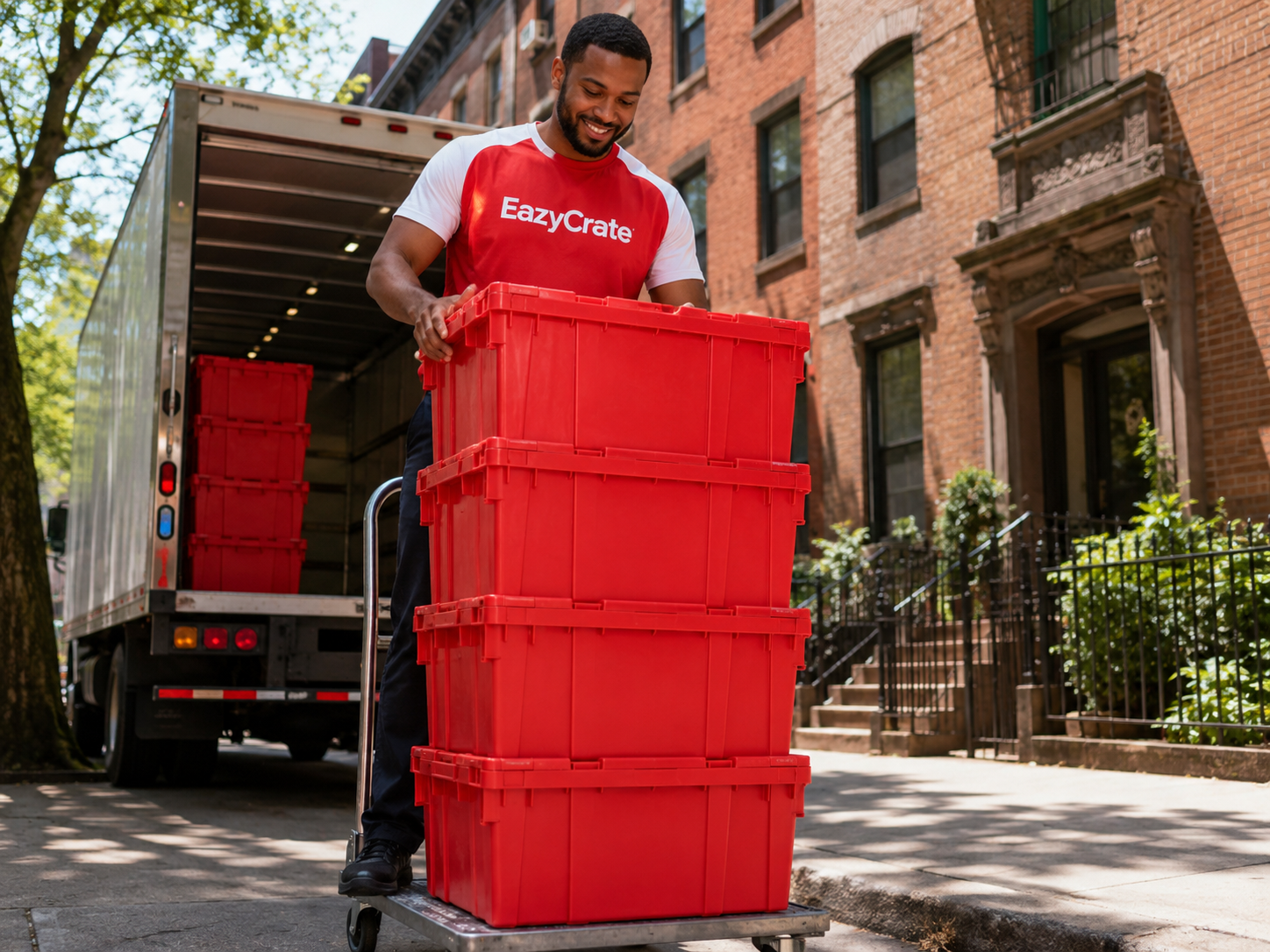
    EazyCrate delivery team unloading reusable plastic moving bins from a vehicle onto a dolly in front of a NYC apartment building
    The Short Answer

    Yes, Movers Will Move Plastic Bins — With a Few Caveats

    Professional movers in NYC move plastic bins every day. Whether you rented them from EazyCrate, bought them at a store, or borrowed them — a moving crew will load, transport, and unload them without any special instructions required.

    In fact, many experienced NYC movers prefer plastic bins. They stack predictably in the truck, don’t collapse under weight, and can be loaded in clean rows without the risk of crushed bottoms that come with heavy cardboard boxes.

    The main thing to understand is the packed-by-owner (PBO) clause, which applies to any container you pack yourself — cardboard boxes or plastic bins alike. We cover it in the next section.

    EazyCrate reusable moving bins stacked on a dolly in a narrow NYC apartment hallway on moving day
    What to Know

    The Packed-by-Owner Rule (PBO): What It Means for Bins

    This is the most important concept to understand when using plastic bins — or any container — with professional movers.

    What PBO means: If you packed the bin yourself, the moving company takes zero liability for the contents inside. If a mover drops the bin or it shifts in the truck, they’re responsible for the bin itself — but not what’s in it. This is standard policy across virtually every NYC moving company, and it applies equally to cardboard boxes and plastic bins.

    The good news: plastic bins are actually safer under PBO conditions than cardboard. They don’t collapse, crush, or get punctured during the move — so your packed items are better protected even without the moving company taking liability for contents.

    If you want full mover liability for specific fragile items, have the movers pack those items themselves — they typically offer this as an add-on service at higher cost.

    Moving Day Prep

    4 Steps to Prep Bins So Movers Don’t Hesitate

    Most crews won’t blink at plastic bins. But following these four steps means zero friction on moving day:

    1
    Keep bins under 50 lbs

    EazyCrate bins can hold up to 65 lbs, but movers lift bins repeatedly all day. Staying under 50 lbs per bin keeps the crew moving fast and reduces any risk of damage from struggling under heavy loads.

    2
    Fully latch all lids

    Snap-close lids need to be fully latched on all corners before the crew arrives. A loose lid can pop open when the bin is tilted or stacked. Check each bin the night before your move.

    3
    Label every bin by room

    Write the destination room clearly on a label on the front and top of each bin. Movers use labels to sort bins as they unload — clear labels mean faster placement and fewer questions at the new place.

    4
    Leave the dolly accessible

    If your rental includes a dolly (EazyCrate delivers one with every package), make sure it’s accessible when the crew arrives. Movers will use it to wheel stacks of bins out — faster than carrying them one at a time.

    Color-coded red reusable moving bins organized by room label in a NYC apartment — bins labeled by destination room for moving day
    If They Push Back

    What to Say If Your Movers Question the Bins

    It’s rare, but occasionally a mover might ask about the bins — usually because they’re unfamiliar with rental crates or want to confirm everything is sealed. A simple explanation resolves it:

    • “These are rented plastic moving bins — same as cardboard boxes, just reusable.”
    • “All lids are fully latched. They stack uniformly and won’t collapse.”
    • “Packed-by-owner applies, same as our cardboard boxes.”

    In our experience, moving crews actually react well to bins — often noting that the uniform shape and rigid structure makes loading the truck faster and cleaner than a mix of mismatched cardboard boxes.

    Plastic Bins vs. Cardboard Boxes: How NYC Movers Compare Them

    Here’s how plastic moving bins and cardboard boxes stack up on the factors that matter most during a professional move:

    Factor Cardboard Boxes Plastic Moving Bins
    Stackability in truck Inconsistent — sizes vary, tops compress under weight Uniform — same size, rigid lid, stack cleanly
    Risk of collapse High for overpacked or damp boxes None — rigid structure holds its shape
    Mover liability PBO (packed by owner) for contents PBO (packed by owner) for contents — same rule
    Weight management Easy to accidentally overpack to 70+ lbs Size naturally limits overpacking
    Moving crew reaction Standard — what most clients use Often preferred for efficiency and clean truck packing

    The verdict: plastic bins aren’t just accepted by NYC movers — they’re often the preferred option. The uniformity and structural integrity make for a cleaner truck pack and fewer items shifting in transit.

    Moving This Week? Skip the Cardboard.

    EazyCrate delivers clean, sturdy plastic bins to your door across all 5 NYC boroughs. Free delivery and pickup. Packages from $119/week.

    Rent Moving Bins →

    Frequently Asked Questions

    Everything you need to know before moving day.

    Do movers treat rental plastic bins the same as cardboard boxes? +
    Yes. Professional movers load, transport, and unload plastic bins exactly as they would cardboard boxes. There’s no special protocol — they’re just containers. The same packed-by-owner liability rules apply to both.
    Do I need to tell my moving company I’m using plastic bins? +
    No advance notice is required. You can mention it when confirming your move if you’d like, but it won’t change pricing, policies, or how the crew handles your move. Most NYC movers see rental bins regularly.
    What’s the maximum weight I should put in a plastic moving bin? +
    Keep each bin under 50 lbs for moving day. EazyCrate bins can hold up to 65 lbs, but movers handle many bins over a long shift — staying under 50 lbs keeps the pace fast and reduces any risk of strain or accidental drops.
    Can I mix plastic bins and cardboard boxes on the same move? +
    Absolutely. Many people use plastic bins for most items and cardboard boxes for a few specific things (wardrobe boxes, mirrors, etc.). Movers handle mixed loads all the time and will figure out the best truck configuration.
    What if a mover damages a rental bin during my move? +
    If a rental bin is structurally damaged by the moving crew — cracked, broken lid, or bent — the moving company is responsible for the bin itself. Document any damage immediately with photos before returning bins to EazyCrate.
    Are plastic bins better than boxes when using professional movers? +
    For most NYC moves, yes. Plastic bins are uniform in size (easier to stack in the truck), won’t collapse under weight, and protect contents better than cardboard that can buckle under heavy furniture. The rental cost is worth it when you factor in time saved and items protected.

    More questions? Contact us — we respond fast.